
Evergreens everywhere in wreaths, trees, and garlands give us a gala invitation to greet God in this season. Inspired by the Christmas tree lot, I have led us nearly every year, dear gardeners, to Isaiah’s passage, connecting the conifers to God’s Word, marrying the pleasing, piney aroma to knowledge of the everlasting Father and His creative power.
I will plant in the wilderness the cedar and the acacia tree, The myrtle and the oil tree; I will set in the desert the cypress tree and the pine And the box tree together, That they may see and know, And consider and understand together, That the hand of the Lord has done this, And the Holy One of Israel has created it. Isaiah 41:19-20 NKJV
In the desert, I will plant cedars, woody acacias, myrtles, and olive trees. I will establish great cypresses to flourish in the desert places, plant oaks and pine trees side by side. They’ll see all this and understand. They’ll ponder together and come to know that it is the power of the Eternal One that produced this. They will know that the Holy One of Israel created it. Isaiah 41:19-20 VOICE
Though I love to return to this treasured Scripture at Christmas time, I had never counted that there were seven evergreens mentioned; frankly, I tended to dismiss myrtle and olive, or oil tree, and gush over the individual Pinaceae family species, meanwhile missing the view of the collection as a whole. Lately this note caught my heart from The Passion Translation Bible and caused me to consider much more:
These seven trees speak of the fullness of new creation life. Compare them to the seven branches of the lampstand and the seven Spirits of God.
quoted from Passion & Fire Ministries, Inc., The Book of Isaiah, The Vision, The Passion Translation, 2019, page 98passionand fire ministries
Knowing that God reveals Himself in everything from gentleness and whisper (Galatians 5:23, 1 Kings 19:12) to fiery chorus (Exodus 19:18-19, Acts 2:3-4), what poetry might there be as He gathers seven multifarious evergreens to showcase His creative handiwork—an evergreen lampstand?
Needled and leafy trees, fruited and cone bearing, edible and ornamental, from forested canopy to lone desert tufts, let us see this arboreal assembly in the structure of the lampstand and receive a new, shining revelation.
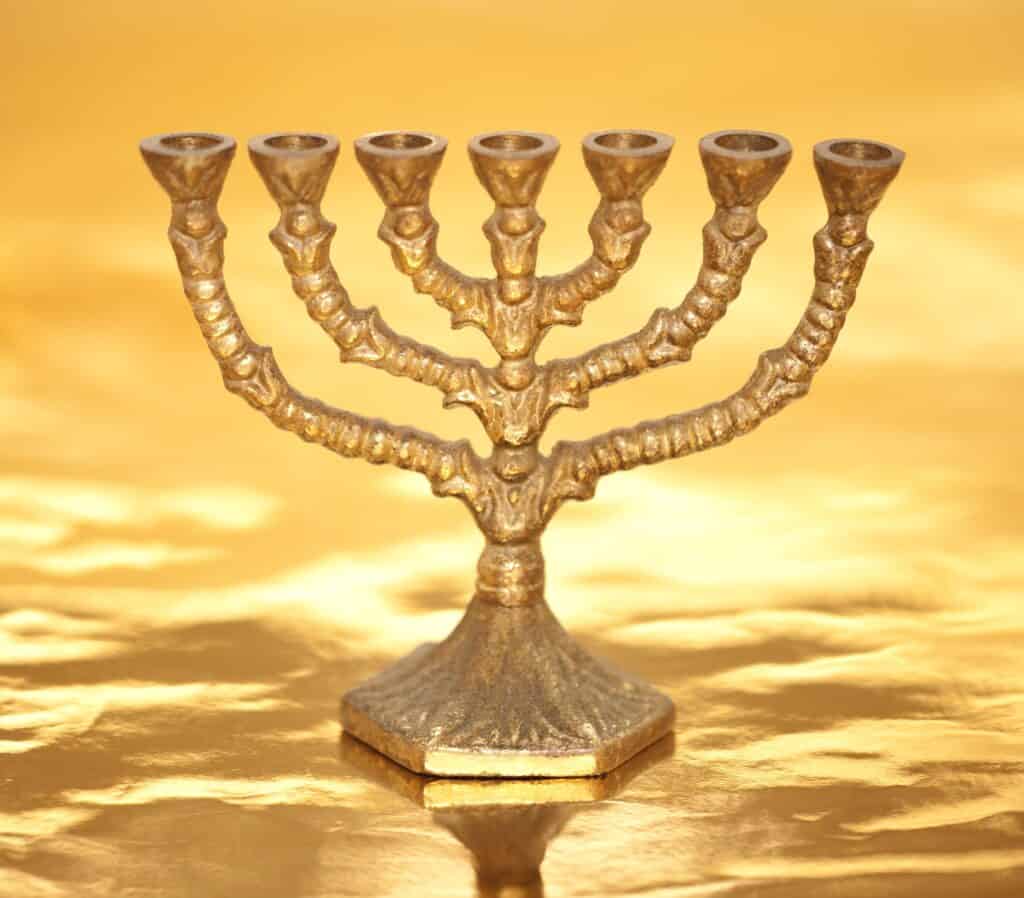
Make a lampstand of pure, hammered gold. Make the entire lampstand and its decorations of one piece—the base, center stem, lamp cups, buds, and petals. Make it with six branches going out from the center stem, three on each side…Craft the center stem of the lampstand with four lamp cups shaped like almond blossoms, complete with buds and petals. Exodus 25:31-32, 34 NLT
The originating lampstand was a tree! Almond imagery decorated the golden menorah, crafted for worship in the desert tabernacle. Now glimpse with me His expanse of trees coming together according to this symbolic form, incorporating the panoramic view of their places in the Bible, and discover a new mystery in this revival prophecy.

Evergreen Lampstand
Amazingly, the seven evergreens listed in Isaiah 41:19 can be grouped clearly into 3–1–3 lampstand structure. What wonder unfolds!
3 Trees of Sanctuary
Three of the trees, cedar [of Lebanon], acacia, and “oil tree,” etz shemen, speak of sanctuary, as each plant was incorporated in the worship of the Lord during Israel’s history.
Cedar lumber constructed the temple, acacia wood crafted the tabernacle furnishings, and oil was used to light the sacred spaces, always burning, also to anoint priests and as offerings.
Plant geek note: Olive fruits from the olive tree were the preferred source of oil, yet the Hebrew word for olive is zayit. While etz shemen noted in the Scripture literally means “tree oil,” and is usually assumed to refer poetically to olive tree, this phrase is considered by some Biblical botanists to name the pine tree*, alluding to its flammable nature. Lumber from etz shemen was also used in constructing the temple, so either way this tree symbolizes sanctuary.
So I have decided to build a temple to honor the Lord my God, as the Lord instructed my father David, ‘Your son, whom I will put on your throne in your place, is the one who will build a temple to honor me.’ So now order some cedars of Lebanon to be cut for me. 1 Kings 5:5-6 NET
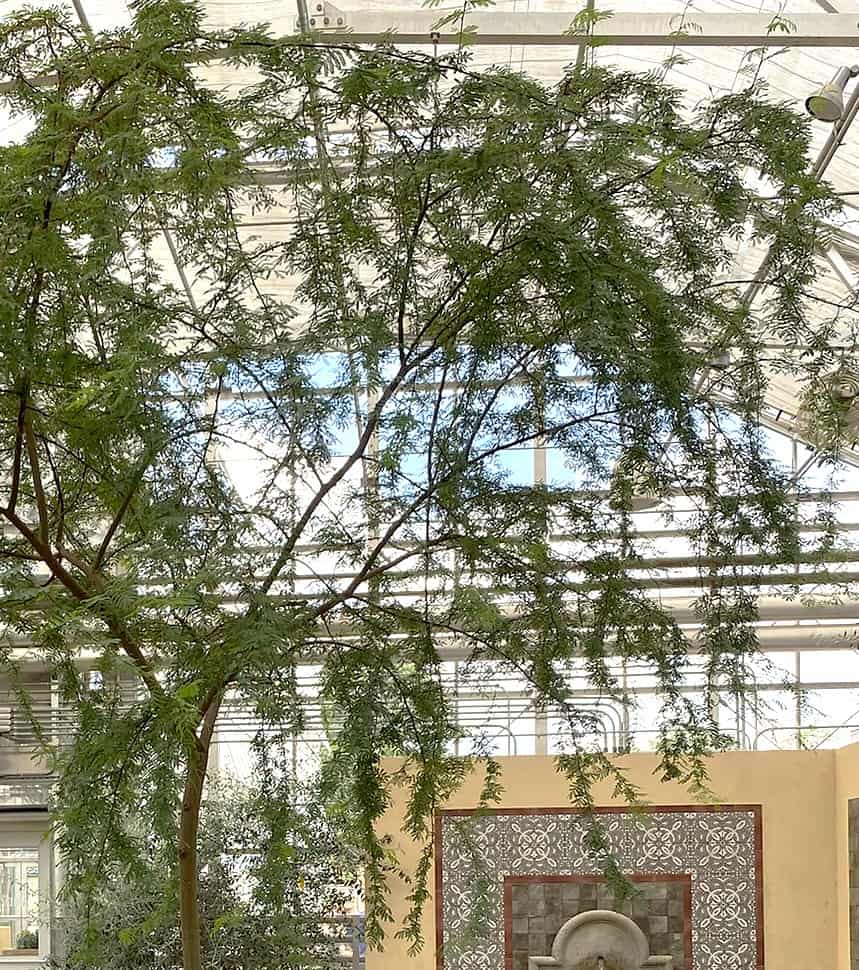
Then have them make a sanctuary for me, and I will dwell among them. Make this tabernacle and all its furnishings exactly like the pattern I will show you. “Have them make an ark of acacia wood…Overlay it with pure gold, both inside and out, and make a gold molding around it. Exodus 25:8-11 NIV
“You are to order the people of Isra’el to bring you pure oil of pounded olives for the light, and to keep a lamp burning continually. Exodus 27:20 CJB
“Here is what Adonai has ordered: ‘Take up a collection for Adonai from among yourselves — anyone whose heart makes him willing is to bring the offering for Adonai… acacia-wood;oil for the light, spices for the anointing oil and for the fragrant incense; Exodus 35:4-5, 7-8 CJB
And the two doors [are] of the oil-tree, and he hath carved upon them carvings of cherubs, and palm-trees, and openings of flowers, and overlaid with gold, and he causeth the gold to go down on the cherubs and on the palm-trees. 1 Kings 6:32 YLT

3 Trees of Unity
The last three trees, berosh, tidhar, and teassur in Hebrew stand together to speak of God’s unity.
Interestingly, the exact identities of these three trees named in Hebrew remain elusive, their species wholly inconclusive to Biblical translators and botanists. In fact, Israeli scholar Michael Zohary, author of Plants of the Bible,* taught that berosh by itself stood for three trees collectively: cypress, fir and juniper. It is no wonder that a line up of translations yields a multitude of species possibilities, as this snapshot created from Bible Gateway’s “in all English translations” feature conveys:

Berosh, tidhar, and teassur might represent a congregation of cypress, fir, juniper, pine, boxwood, laurustinus, elm, maple, plane tree, and some infer oaks. A multitude! Yet through this, the pervading message is that the collective comes together, that the once arid lowland now flourishes a fantastic forest, and that the harmony of dissimilar species comes miraculously by His hand. This pictures the unity we have in Christ, drawn together in His Spirit to be one mind and one voice.
Myrtle Tree in the Middle
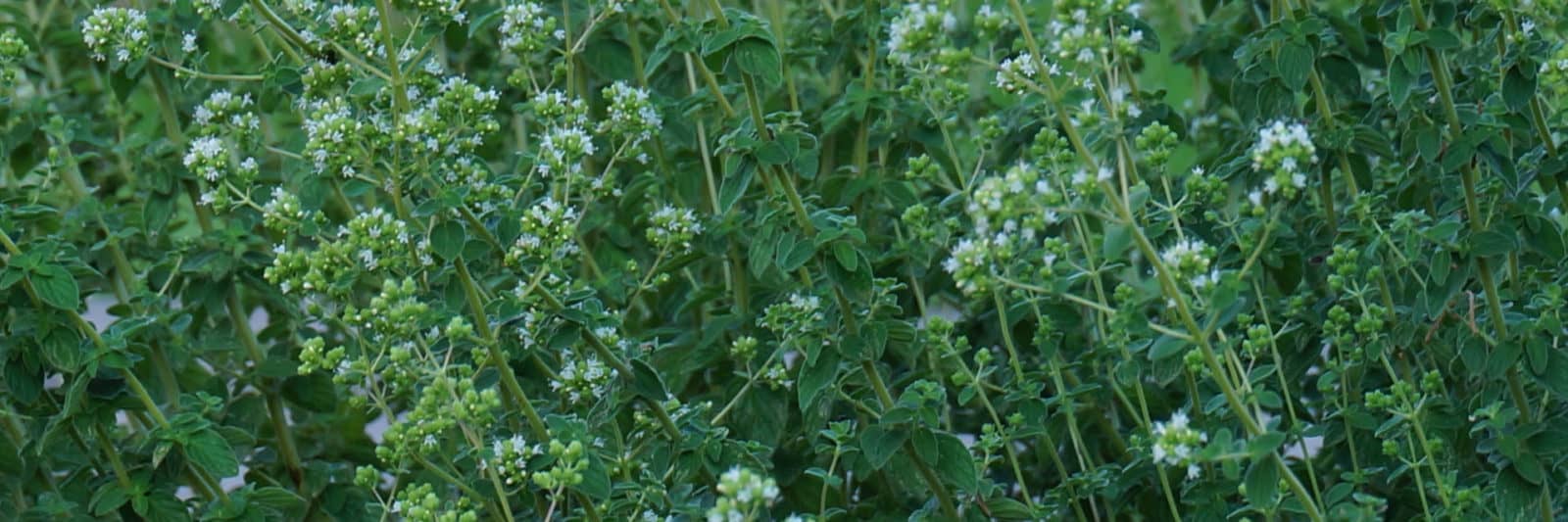
With three trees on either side, let us now consider the remaining tree, myrtle, as the central evergreen; myrtle speaks of overflowing, delightful goodness and prosperity.

A vibrant, leafy, lush tree, pleasingly scented, a welcoming species to engage with, overflowing with prospering happy-goodness: myrtle offers much as the center of this evergreen lampstand! Let us focus on two mentions, the pleasant prevailing of “Queen Myrtle” (Esther’s name means myrtle) and the proclamation Zechariah received from the man in the myrtle trees.
During the night I had a vision, and there before me was a man mounted on a red horse. He was standing among the myrtle trees in a ravine…Then the angel of the Lord said…”Proclaim further: This is what the Lord Almighty says: ‘My towns will again overflow with prosperity Zechariah 1:8, 12, 17 NIV
The Word for prosperity in this prophecy pops up 14 times throughout the story of Esther, from her good looks to Mordecai’s epilogue establishment as a good administrator.
He became foster father to his cousin Hadassah, that is, Esther, when she lost both father and mother. The young woman was beautifully formed and lovely to behold. Esther 2:7 NABRE
For Mordecai the Jew became second-in-command to King Ahasuerus, and he was highly revered among the Jews because he worked for the prosperity of his people and was an advocate for their well-being. Esther 10:3 VOICE
This assignment of myrtle as a metaphor for God’s overflowing prosperity and goodness circles back to the creation story, where God proclaimed His works each day as good, and moved from there to plant the garden in Eden, His delight. The Holy One of Israel has created it!
Emerald Visions
Wow the evergreen lampstand gives us much to consider, and there are many more connections to be made…stories for another day! For now, ponder with me that perhaps we are seeing a glimpse of God’s throne as John conveyed in glowing, green light.
Instantly I was in the Spirit, and there before me in heaven stood a throne, and on the throne Someone was sitting. The One sitting there gleamed like diamonds and rubies, and a rainbow shining like emerald encircled the throne. Revelation 4:2-3 CJB

Closing Prayer
O Lord, thank you for the blessings you put in our lives. While I have traditionally taken Isaiah’s plant list to the Christmas tree lot—and Your Pinaceae species are certainly divine—now You want my fresh engagement. I praise You for Your move to make old things new and for your adorable works of unity. You have so many mysteries for us to behold! Let us abound in Your overflowing goodness and prosperity, the goodness first revealed in Your creation (Genesis 1:4) that carries on forever. Keep speaking to me about sanctuary, overflowing goodness, and unity; let me continue to ponder these profound things and how they come together. By Your hand I can be in harmony with all the many people around me – thank you, Jesus and Hallelujah! In Jesus’ Name, Amen.
Honor and majesty are before Him; Strength and beauty are in His sanctuary. Psalm 96:6 NKJV


*Many thanks to Michael Zohary and his insightful research, I have relied on his work for analysis of etz shemen and berosh, tidhar, and teassur, Michael Zohary, Plants of the Bible (Cambridge, Mass.: Cambridge University Press, 1982), pages 114, and 106, 112 respectively
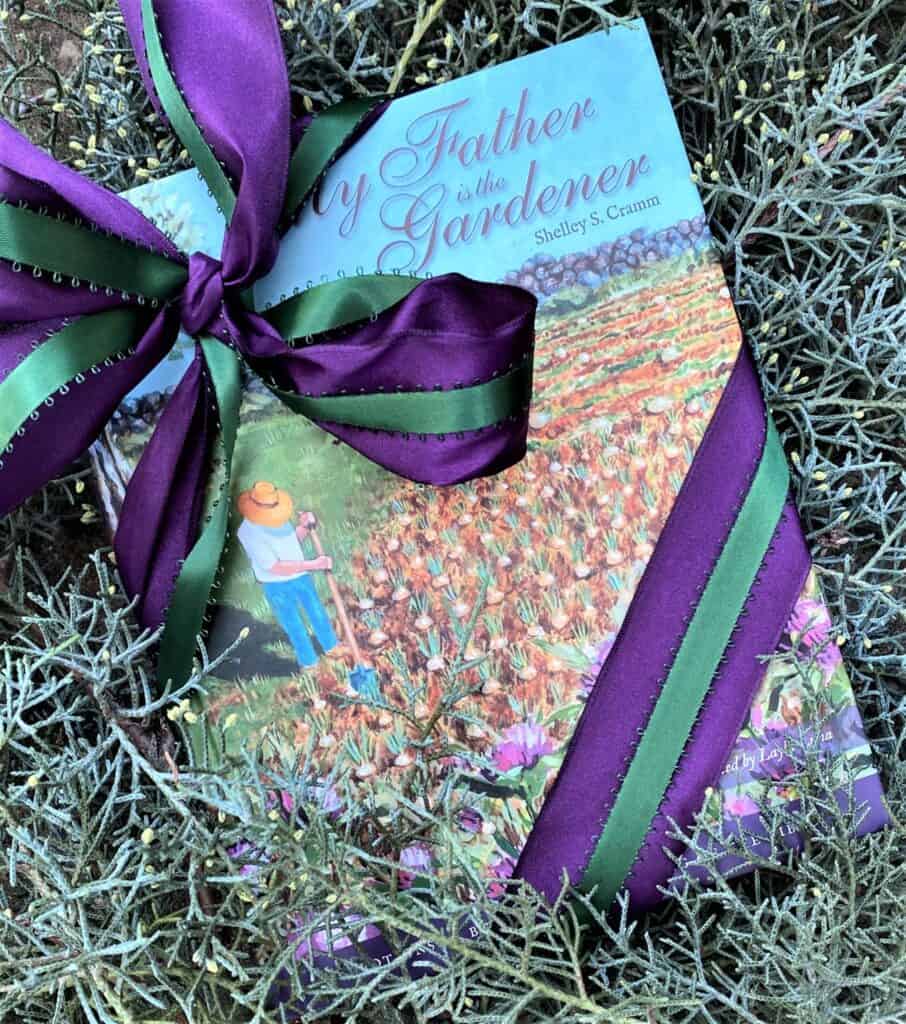
Find so many hints in the horticulture of God’s Word! My Father is the Gardener, Devotions in Botany and Gardening of the Bible – a perfect gift for the gardener and enjoy 20% off at BRIT Press with discount code BLACKFRIDAY25 Thank you for your support!
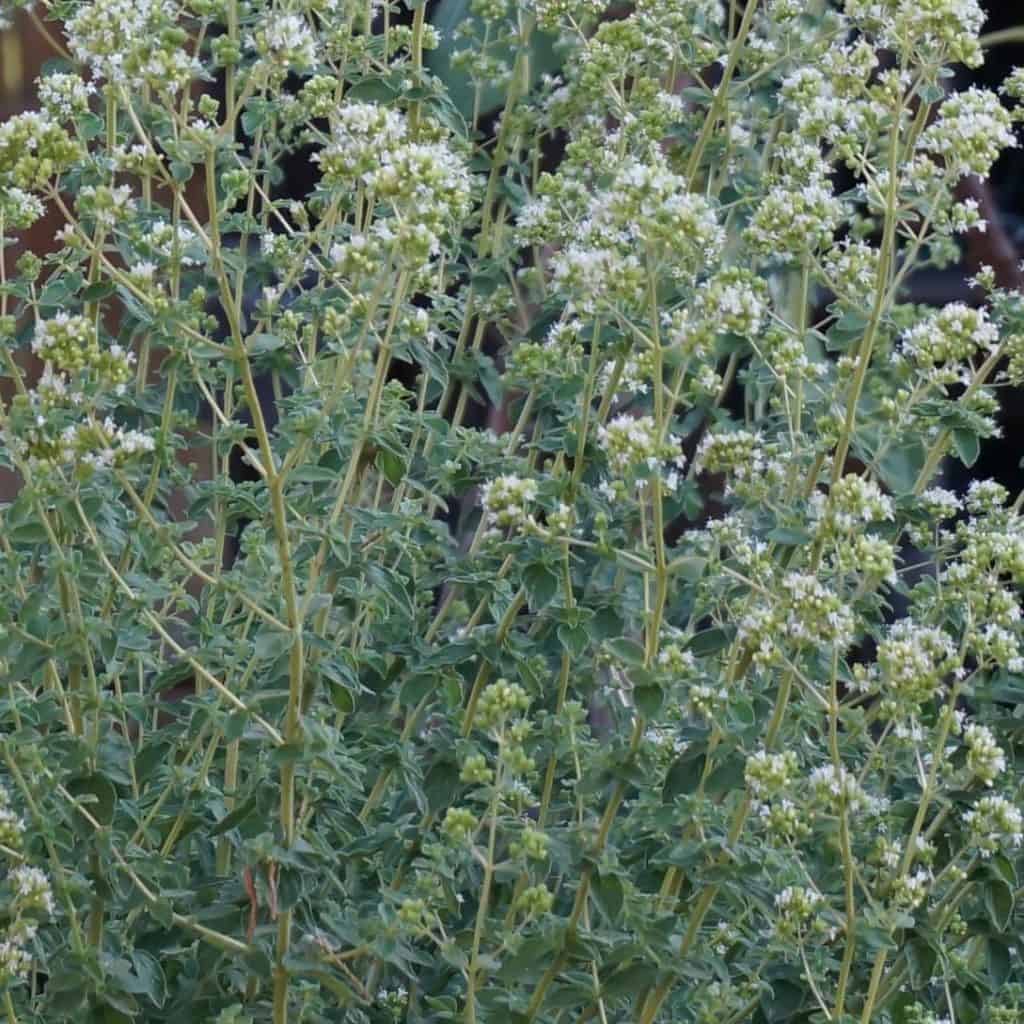
Isaiah’s Evergreens are a favorite subject in the Devotions Blog – dig into the details of Cedar of Lebanon, fir, cypress, pine and more!

Find more information on planting and growing the amazing trees of Isaiah 41:19 in the Plant Guide – also myrtle and olive, and acacia is coming soon!
Enjoy the A-to-Z Primer of Plants in God’s Word and take in the poetry of C is for Cedar, J is for Juniper, O is for Olive, and Let’s Celebrate Y with mYrtle
Photo Credits: ID 41448721 © Jakub Krechowicz | Dreamstime.com Golden Menorah over gold background; © 2006 Rob van Hilten from Flickr Creative Commons – Hundreds of buxus plants stand in line; all other photos © Shelley S. Cramm
CJB notes Scripture quotations taken from the Complete Jewish Bible by David H. Stern. Copyright © 1998. All rights reserved. Used by permission of Messianic Jewish Publishers, 6120 Day Long Lane, Clarksville, MD 21029. www.messianicjewish.net.
NABRE denotes Scripture texts taken from the New American Bible, revised edition © 2010, 1991, 1986, 1970 Confraternity of Christian Doctrine, Inc., Washington, DC All Rights Reserved. No part of this work may be reproduced or transmitted in any form or by any means, electronic or mechanical, including photocopying, recording, or by any information storage and retrieval system, without permission in writing from the copyright owner.
NET designates Scripture quoted by permission from the NET Bible® copyright ©1996, 2019 by Biblical Studies Press, L.L.C. http://netbible.com All rights reserved.
NIV denotes Scripture quotations taken from the Holy Bible, New International Version®, NIV®. Copyright © 1973, 1978, 1984, 2011 by Biblica, Inc.® Used by permission of Zondervan. All rights reserved worldwide. www.zondervan.com The “NIV” and “New International Version” are trademarks registered in the United States Patent and Trademark Office by Biblica, Inc.®
NKJV denotes Scripture taken from the New King James Version®. Copyright © 1982 by Thomas Nelson. Used by permission. All rights reserved.
NLT denotes Scripture quotations taken from the Holy Bible, New Living Translation, copyright © 1996, 2004, 2015 by Tyndale House Foundation. Used by permission of Tyndale House Publishers, Inc., Carol Stream, Illinois 60188. All rights reserved.
VOICE denotes Scripture quotations taken from The Voice™. Copyright © 2012 by Ecclesia Bible Society. Used by permission. All rights reserved.
YLT designates Scripture quotations taken from the 1898 Young’s Literal Translation by Robert Young, now public domain in the United States. The book is still in print and may be ordered from Baker Book House.


