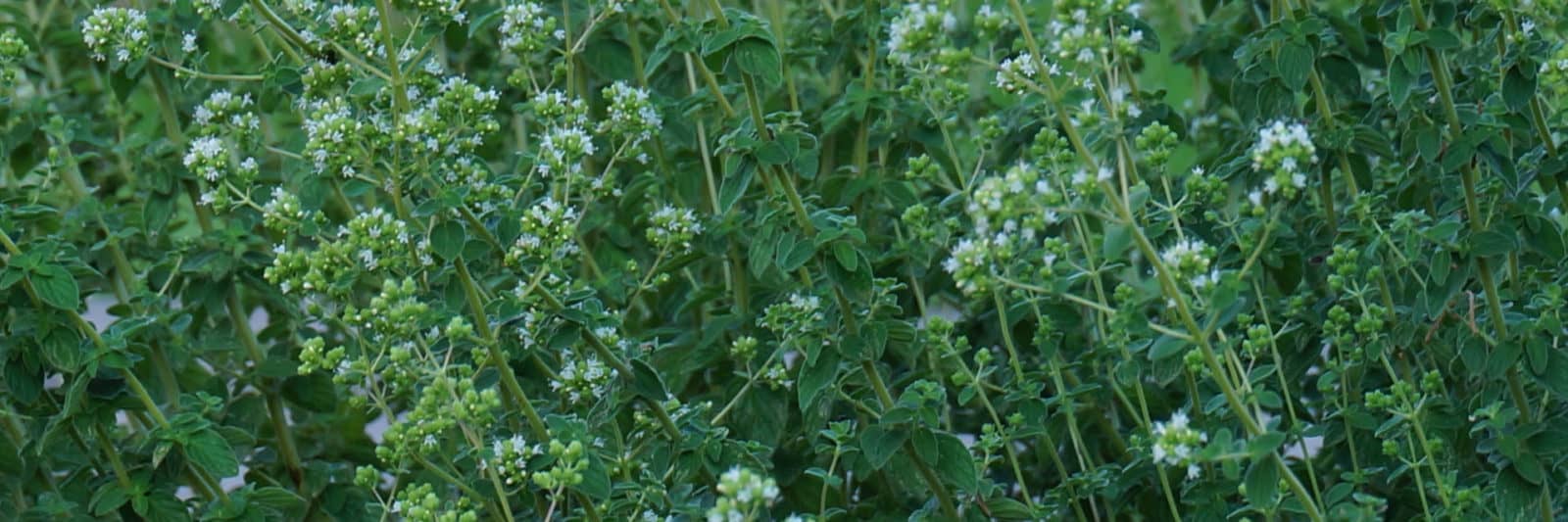
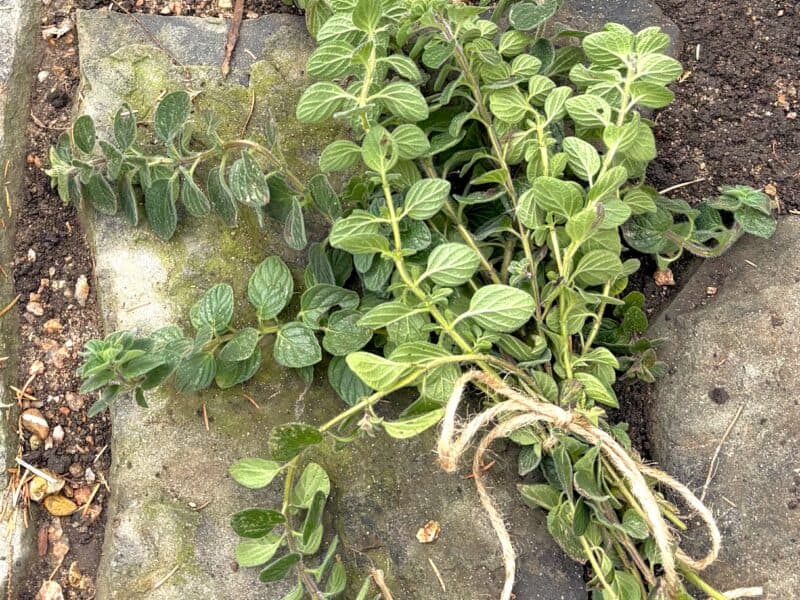
The Plants of Jesus’ Path have led us to the crucifixion, where we knew it would; to the hard place of His grievous hanging on the cross, a dry-tree stake, the structure intended to deliver His death with the fullest measure of inhumane horror. Imagining this outrageous injustice graced with a hyssop stem offers a bleak break in the madness, an understated glance of green in the tortured darkness. Hyssop is an unassuming herb that must have released its minted, earthy fragrance, just as the Savior spoke His final proclamation, breathed His last, and secured our forgiveness.
After this, when Jesus knew that all was now finished, he said (in order to fulfil the scripture), ‘I am thirsty.’ A jar full of sour wine was standing there. So they put a sponge full of the wine on a branch of hyssop and held it to his mouth. When Jesus had received the wine, he said, ‘It is finished.’ Then he bowed his head and gave up his spirit. John 19:28-30 NRSVA
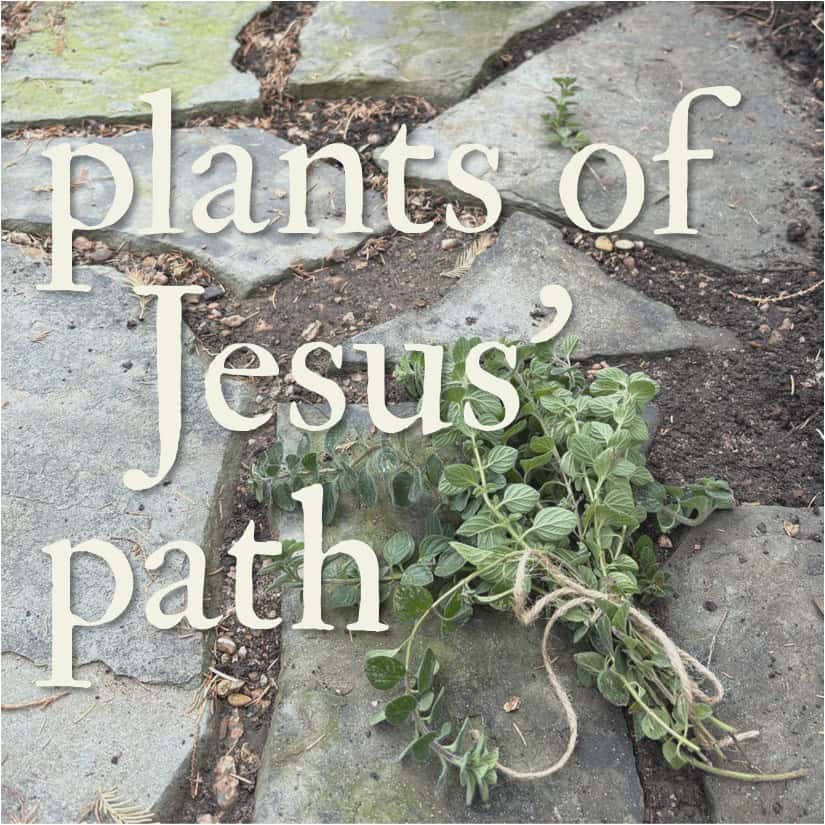
Hyssop is mentioned in John’s gospel, a detail absent in accounts by Matthew, Mark and Luke, yet through this demure branch, we are brushed with the bigger picture, the continuous landscape of God-workings, another plant of the field positioned to remember God’s restoration.
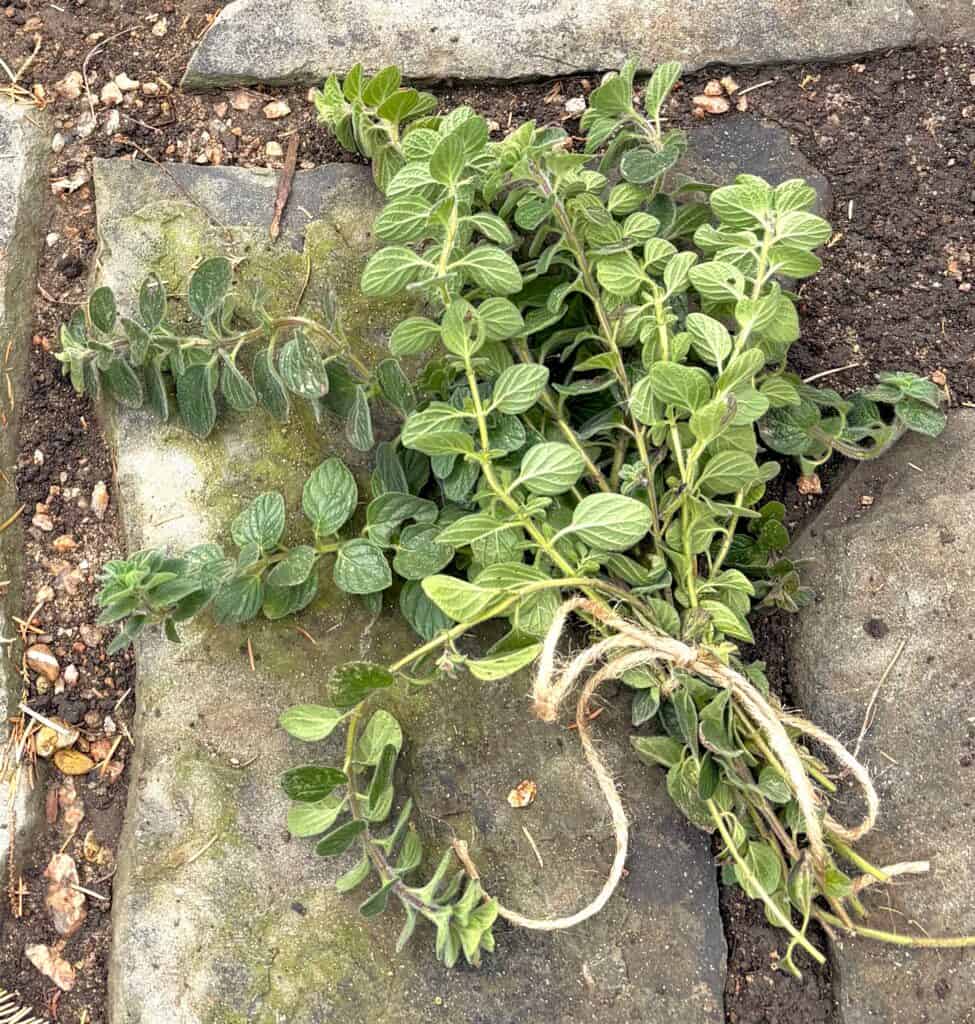
This selected herb is not a chance handful from a kitchen garden but a poetic signature; lifting this specific greenery, likely Origanum syriacum, connected Jesus’ death to the humble botanical at the heart of Pesach, Passover, and the story of God’s deliverance from slavery.
Hyssop at Passover
Hyssop was called upon to mark doorframes with lamb’s blood, signaling the angel of death to pass over the households of God’s beloved in Egypt.
You shall take a bunch of hyssop, and dip it in the blood that is in the basin, and apply the lintel and the two side posts with the blood that is in the basin, and none of you shall go out from the door of his house until the morning. For the Lord will pass through to kill the Egyptians. And when He sees the blood upon the lintel and on the two side posts, the Lord will pass over the door and will not permit the destroyer to come to your houses to kill you. Exodus 12:22-24 MEV
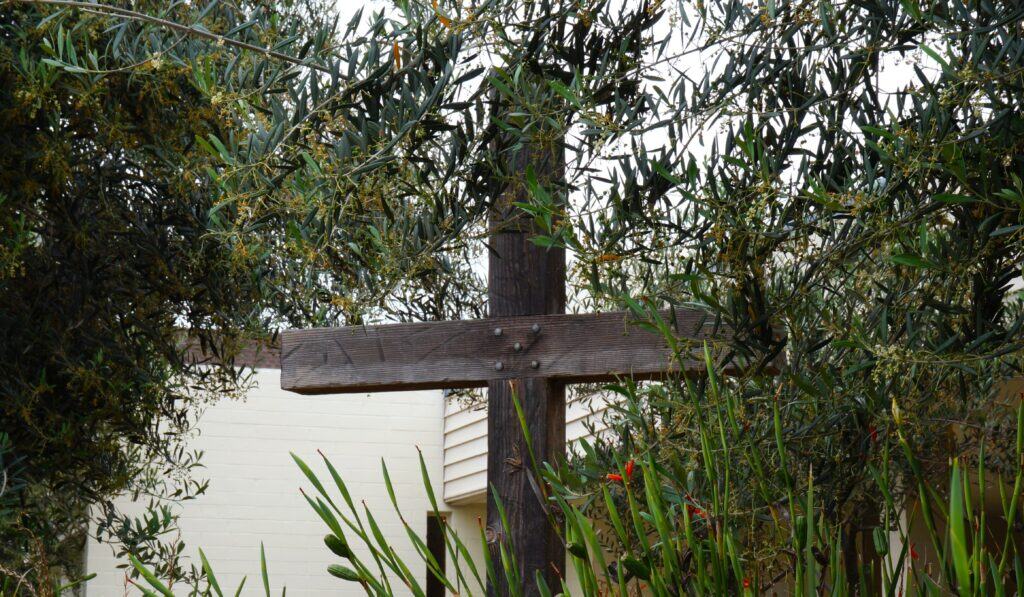
The Israelites were slaves under a tyrannical Egyptian regime, and how much more are we all captive to dominating sin (Romans 6:16-23)? Dead-end habits, life-draining dependencies, repeated defeats and deception plague our lives, yet hyssop hints that from all of these, Christ delivers and sets free! The groundwork is laid: “It is finished” marked His way to forgiveness.
I give all my thanks to God, for his mighty power has finally provided a way out through our Lord Jesus, the Anointed One! So if left to myself, the flesh is aligned with the law of sin, but now my renewed mind is fixed on and submitted to God’s righteous principles. Romans 7:24-25 TPT
Christ received the wages of sin in our place, forging the path of forgiveness for us and the freedom revival yearned for in the poetry of David’s Psalm 51.
Cleanse Me with Hyssop
David, epic leader, valiant defender, who fought relentlessly to establish the righteous rule of God, nonetheless hopelessly sinful like all of us: Mighty David crooned for this humble plant, asking to be washed of wayward character, daring to hope that his downfall could be cleansed like a day’s load of laundry.*
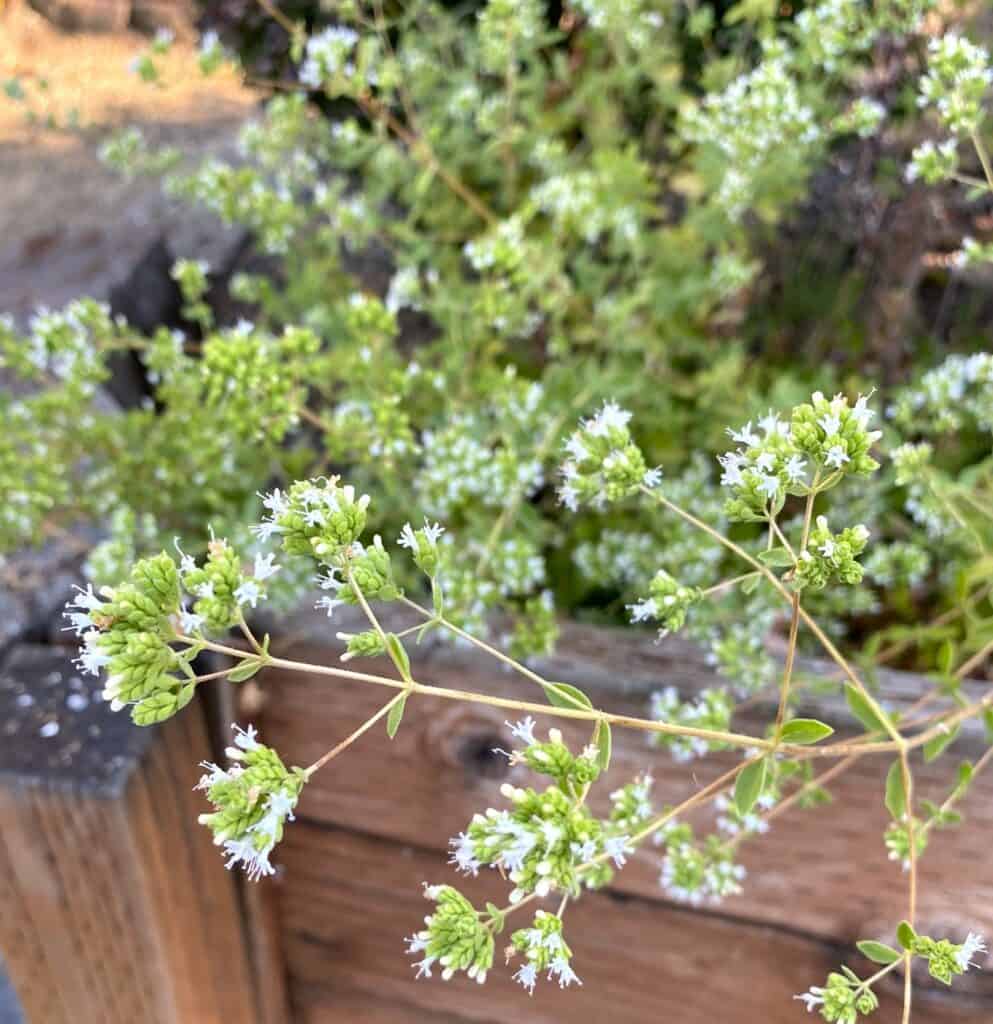
Cleanse me with hyssop, and I will be clean; wash me, and I will be whiter than snow. Let me hear joy and gladness; let the bones you have crushed rejoice. Hide your face from my sins and blot out all my iniquity. Create in me a pure heart, O God, and renew a steadfast spirit within me. Psalm 51:7-10 NIV
God, make a fresh start in me, shape a Genesis week from the chaos of my life. Psalm 51:10 The Message
Chaotic choices become the ordered story of God, hallelujah! What a humble reality is forgiveness, a testimony held in hyssop, a humble garden mint.
Growing Hyssop
Hyssop is a delightful Biblical plant to grow with its no-fuss culture. It slips with ease into an herb garden or performs graciously as a low-water, low-growing landscape shrub. We might brush past this unpretentious patch of green except for the Word of God. God-given curiosity compelled me to grow it, and Spirit-inspired creativity moves me to cook and fill vases with it and pass along transplants to friends and lift leaves-scented hands to my face whenever I pass by. Because of its subtle appearance in the throes of the Savior’s death—Jesus dying my death—I cherish the substance of its softly fragrant leaves.
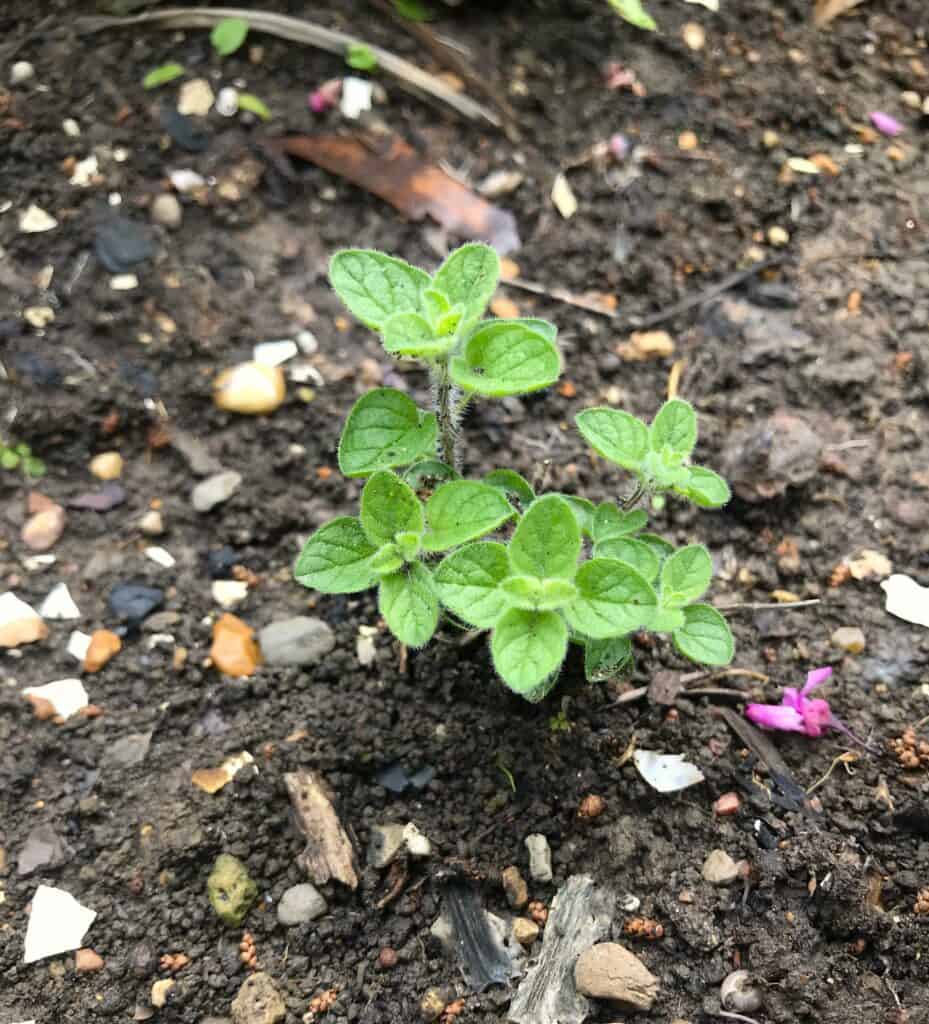
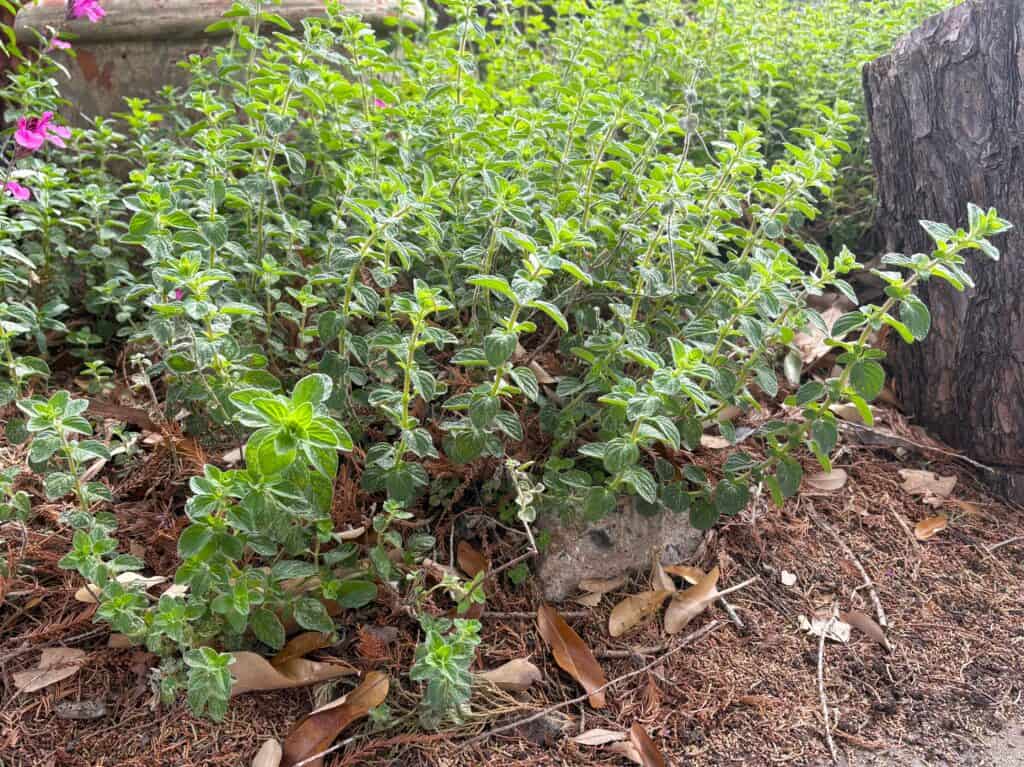
Hyssop grows low and densely along the ground, with small, warm green leaves and tiny white flower clusters blooming the branch tops. Like most herbs so forgiving in their culture, hyssop thrives in full sun exposure with little need of water or soil enrichment. Growing along roads and routes across the Holy Land, hyssop is resilient if tread upon. Its woody stems make the plant useful as kindling, as well as being edible and having medicinal value. A plant of common occurrence, modest needs, and highly useful: These cultural qualities make it representative of humility… yielding a readiness to receive forgiveness.
—from “Cleanse Me With Hyssop,” My Father is the Gardener, page 101
Plant hyssop, perhaps with bare ground or a low bench next to it, a secured spot to collapse and cry when the accuser’s voice clamors and shame and guilt come for you (Psalm 51:3-4). Nestled near the gentle aroma, be nudged back to God’s reality: mercy and forgiveness are His currency.
For information on growing hyssop go to the Garden in Delight Plant Guide
Garden Details
It is John who gave us the garden details: Mary supposing the Resurrected Christ to be a gardener (John 20:15), the crucifixion and the readied tomb happening near a garden (John 19:41), and the hyssop branch with the vinegar lifted to thirsting Jesus (John 19:29). One more nuance caught my eye freshly this season: Only in John’s recounting does the third of Peter’s denials include a garden detail:
“Wait! Didn’t I see you out there in the garden with Jesus?” John 18:26 TPT
Yes, the servant was referring to Peter’s night in Gethsemane accompanying the Savior, but the Word can spill off the page and into each of our lives! Let us learn from Peter, along with the fig tree lesson, and our collected revelations from palm branches, wheat and grapes, spikenard roots, olive trees, and encircling thorns, and answer a rejoicing, “YES! You saw me out there in the garden with Jesus.” Hallelujah!
I dwell in high and holy places but also with the bruised and lowly in spirit, those who are humble and quick to repent. I dwell with them to revive the spirit of the humble, to revive the heart of those who are broken over their sin. You will not find me continually accusing them or holding anger against them lest they feel defeated and lose heart before me. For I am the One who gave the breath of life to my people. Isaiah 57:15-19 TPT
H A P P Y R E S U R R E C T I O N!

*of course, it is doubtful that David washed/had his laundry washed everyday; this is a personal reference to my precious life raising five children! The Hebrew word for wash, kabas, refers to washing clothes, different from bathing.
What a Lent season, thank you for joining me! The Devotions Blog returns to its monthly release schedule in May. Additionally, subscribe separately to Garden in Delight News on Substack, published in May, August, and November.
The Plants of Jesus’ Path is a 7-week study of plants as a way of cultivating a deeper appreciation for our Savior in the days leading to His crucifixion. These botanical touchpoints are met through tangible, scent-filled, tasty or intriguing branches, fruits, roots, trees or shrubs that give us something to grasp in a story hugely ungraspable. They are planted in key places to reveal the immensity of our Savior’s grace, showing us converging prophecy and backstory to understand who He is and what He has done for us. Imagine the Stations of the Cross coming to Passover Dinner! Encounter palm branches, wheat & grapes in bread & wine, fig tree, spikenard, olive trees, thorns, and hyssop with the garden as your guide to a refreshed heart, ready to celebrate the Resurrection.
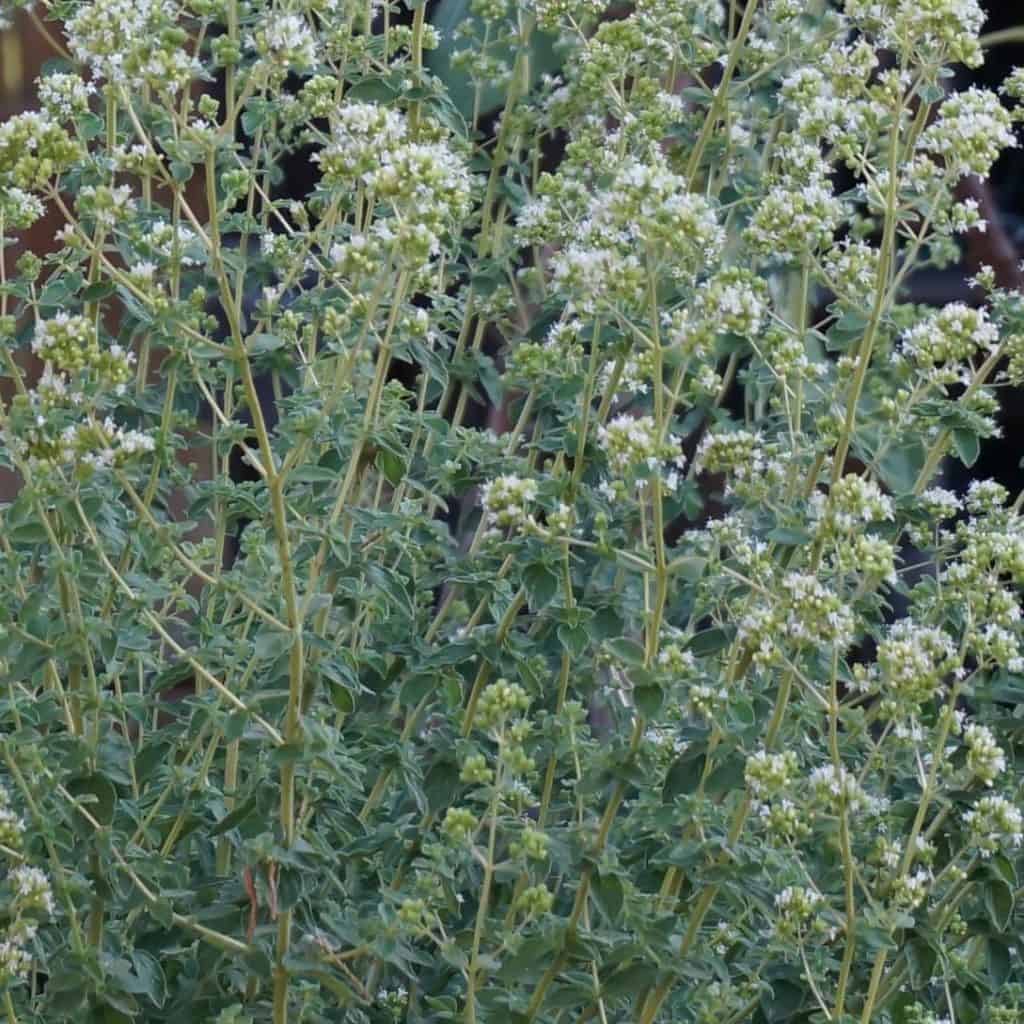
Hyssop is an old friend in the Devotions Blog! Enjoy these articles for more information and recipes with hyssop: Hyssop Flower & Honey Ice Cream, Grace Flavored (a bread recipe), Herbs of the Bible (and Spices), Garden Volunteers, and see hyssop growing at the U.S. Botanic Gardens in Sacred Gardens in DC

Ready to have hyssop grace your garden? Learn to grow hyssop in the Plant Guide
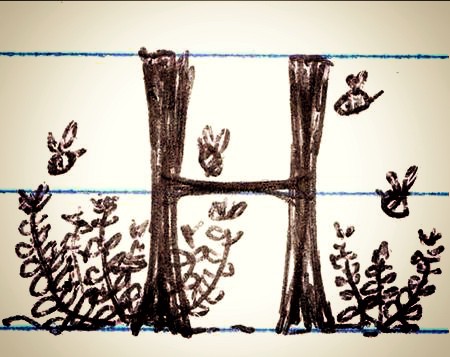
Let this humble herb plant in your heart in H is for Hyssop, from the A-to-Z Primer of Plants from God’s Word
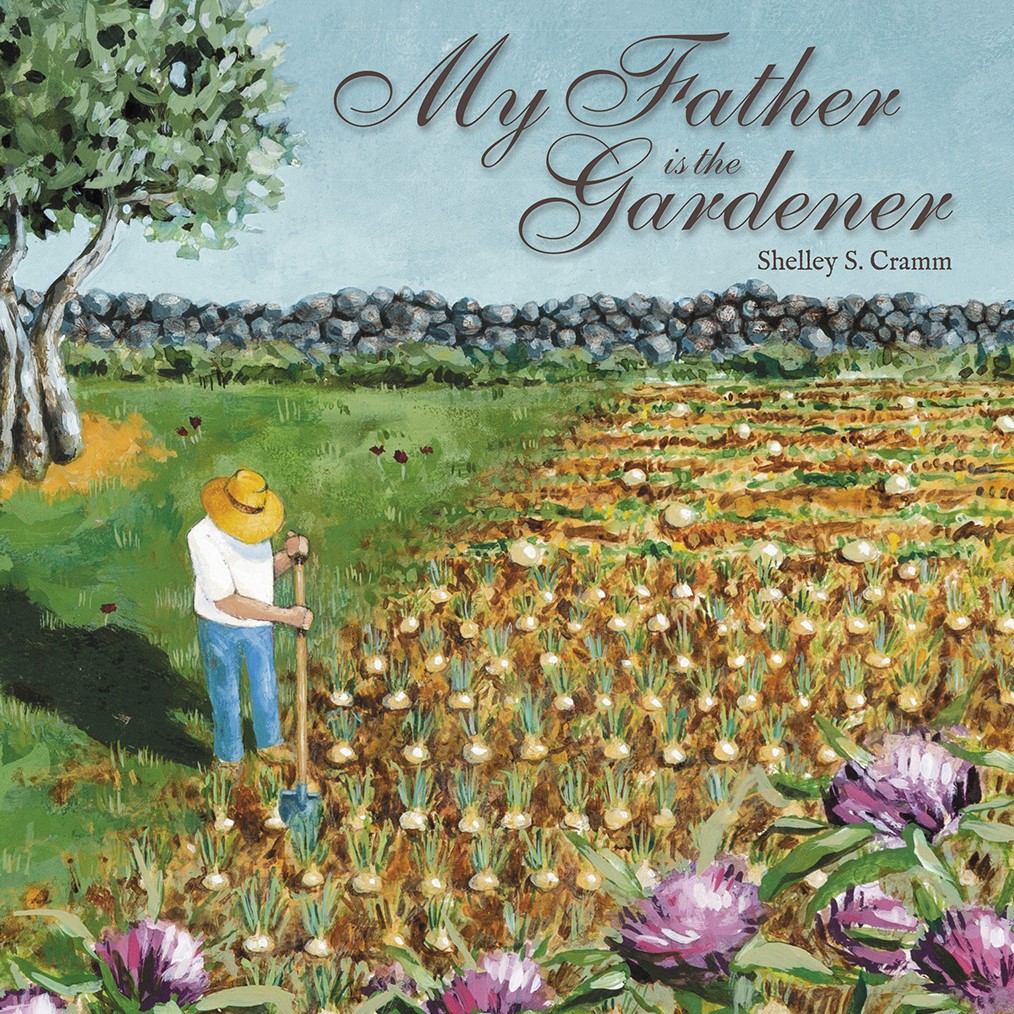
Read more about hyssop and its endearment in the Bible in My Father is the Gardener, chapter 8. Additionally, journal questions for the chapter are available at Watering & Papyrus and Hyssop – Garden In Delight
Read more on hyssop in the devotions series on Watering from the Garden Work section beginning on page a-26 in God’s Word for Gardeners Bible
Photo Credits: ©Shelley S. Cramm
The Message denotes Scripture quotations taken from THE MESSAGE, copyright © 1993, 2002, 2018 by Eugene H. Peterson. Used by permission of NavPress. All rights reserved. Represented by Tyndale House Publishers, a Division of Tyndale House Ministries.
MEV denotes Scripture quotations taken from The Holy Bible, Modern English Version. Copyright © 2014 by Military Bible Association. Published and distributed by Charisma House. All rights reserved
NIV denotes Scripture quotations taken from the Holy Bible, New International Version®, NIV®. Copyright © 1973, 1978, 1984, 2011 by Biblica, Inc.® Used by permission of Zondervan. All rights reserved worldwide. www.zondervan.com The “NIV” and “New International Version” are trademarks registered in the United States Patent and Trademark Office by Biblica, Inc.®
NRSVA denotes New Revised Standard Version Bible: Anglicised Edition, copyright © 1989, 1995 the Division of Christian Education of the National Council of the Churches of Christ in the United States of America. Used by permission. All rights reserved.
TPT denotes Scripture quotations taken from The Passion Translation®. Copyright © 2017, 2018, 2020 by Passion & Fire Ministries, Inc. Used by permission. All rights reserved. ThePassionTranslation.com


