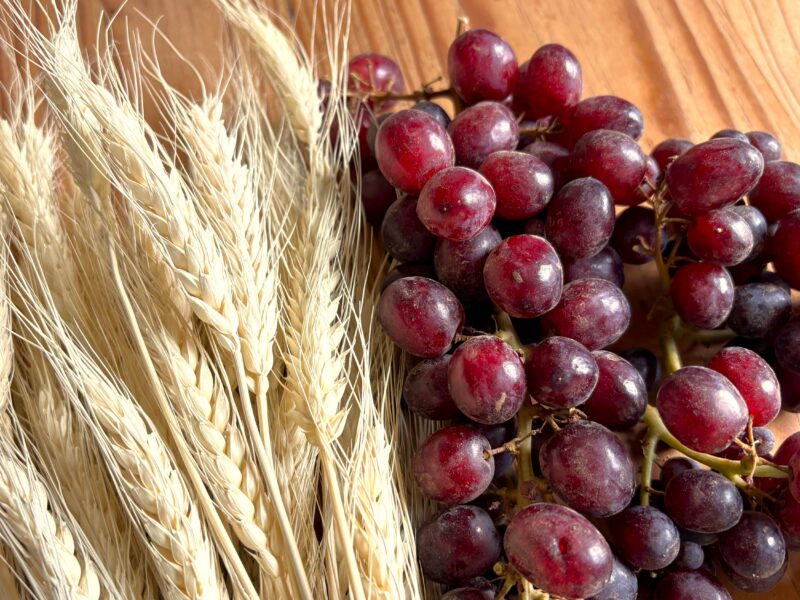
Continuing along the Plants of Jesus’ Path, we are called in wheat and grapes to the Table. That is, wheat milled into flour to bake bread, grapes pressed for their juice to make wine, creating food and drink to remember Jesus. Imagine His impartation in the glowing lamplight, sitting at a table among his disciples, celebrating Passover dinner.
Jesus looked forward to this meal with them, now known as the legendary Last Supper. He set these elements apart from field and vineyard, forever captured as Communion, commonly called The Lord’s Table.
While they were eating, Jesus took a loaf of bread and blessed it. Then he broke it in pieces and handed it to the disciples, saying, “Take this and eat it. This is my body.” Then he took a cup, gave thanks, and gave it to them, saying, “Drink from it, all of you, because this is my blood of the new covenant that is being poured out for many people for the forgiveness of sins. Matthew 26:26-28 ISV
Matthew, Mark 14:22-24, and Luke 22:17-20 tell about Jesus’ Communion remembrance at their intimate Passover celebration, yet John revealed that Jesus had been teaching them about its significance and turnaround all along.
“Only insofar as you eat and drink flesh and blood, the flesh and blood of the Son of Man, do you have life within you. The one who brings a hearty appetite to this eating and drinking has eternal life and will be fit and ready for the Final Day. My flesh is real food and my blood is real drink. By eating my flesh and drinking my blood you enter into me and I into you. In the same way that the fully alive Father sent me here and I live because of him, so the one who makes a meal of me lives because of me. This is the Bread from heaven. Your ancestors ate bread and later died. Whoever eats this Bread will live always.” John 6:53-58 The Message
Jesus was not promoting cannibalism, of course; although the bluntness of His statement was and still is arresting. Then and now, the Savior grabbed attention through hyperbole to lead people towards the spiritual nature that He came to restore. His “flesh”—His Words, His teachings, His ways—are sustaining; His “blood”—His life and His authority—transfers to us, when we receive it, and becomes our life. Life is in the blood (Leviticus 17:11). We are to reorder our way of feeding ourselves and quenching our thirst, Jesus first.
Communion Grounded
The theology of Communion is mysterious, rigorous and intricate; what reads as a remembrance moment during the last meal Jesus ate with His disciples has staggering, strategic implications connecting to His Atonement as the Passover Lamb (John 1:29, 36; Romans 3:25; 1 Peter 1:19) and the authority of the New Covenant established by His blood (Hebrews 8:8, 12:24), for starters.
Moreover, many formal, liturgical practices envelop this holy moment, matters too lofty for me to know! This is not a rewrite of Communion doctrine but reflecting new—a gardener’s point of view—in the old (Matthew 13:52): The simple, profound reality that these elements come from the ground, like the ground that we tend to in our gardens, dear Gardeners. Taking communion summons us to encounter the Lord, grounding us in Him. Amazingly, bringing wheat and grapes to the Table stirs the saga of Eden, connecting this holy supper to the first garden: Jesus’ path leads us to the most revolutionary Garden-to-Table story ever written!

Garden of Eden Backstory
The Garden of Eden, planted by the Lord God, was the first garden created to bless the first people He made, a place to nurture their hearts entwined together. Its pleasing scenery sheltered their captivating, three-person-one-heartbeat relationship, God, Adam, and Eve; a special reflection of God: Father, Son, and Holy Spirit. God’s presence filled the air, as did tasty, colorful, plentiful fruits, suspended in well-watered trees. Sweet scenery all around them, pure loveliness mirroring God’s loving embrace, all good and growing in idyllic, happy patter. <Sigh>.
We all know where the story spirals from here: To only one tree NOT to eat from, which Adam and Eve promptly did. Relationship severed, death warrant issued.
The Ground Cursed
By listening to another voice, they shifted from God’s, invoking a curse in the place of bucolic blessing. First, let’s see the Word to Adam:
To Adam he said, “Because you listened to what your wife said and ate from the tree about which I gave you the order, ‘You are not to eat from it,’ the ground is cursed on your account; you will work hard to eat from it as long as you live. It will produce thorns and thistles for you, and you will eat field plants. You will eat bread by the sweat of your forehead till you return to the ground — for you were taken out of it: you are dust, and you will return to dust.” Genesis 3:17-19 CJB
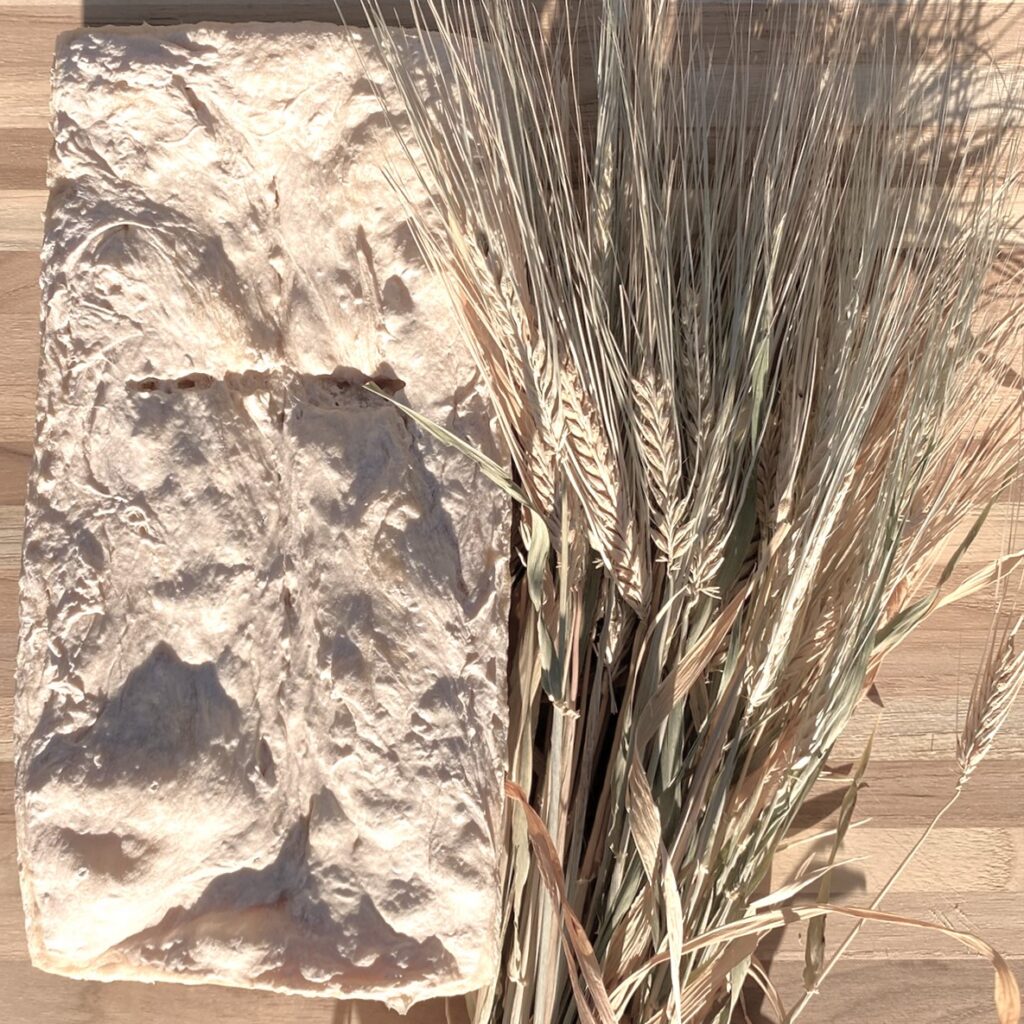
This curse diverted Adam’s garden care to field plants, where work would be painfully infuriating and sweaty. Field work would not be a simple matter of sauntering under shady canopy, face to the sky, plucking juicy fruit from the tree of choice. Now he would heave, shovel, and plough—bent over, face to the ground—to overturn soil and scatter seed. Fruit trees are planted once and produce perennially; field plants require repeating the grunt work by reseeding each year, ugh.
Yet wheat is a field plant.
Wheat is a Field Plant
By yearning for Passover dinner together and blessing the bread as His body, Jesus revealed that He has entered the long-ago curse and redeemed it. He anointed a “field plant” as an invitation to Communion; He reclaimed the broken ground and blessed it. He is the Seed, after all, prophesied to fix all of this.
Truly, truly, I say to you, unless the wheat seed falls into the ground and dies, it remains alone. If it dies, it brings forth much fruit. John 12:24 NMB
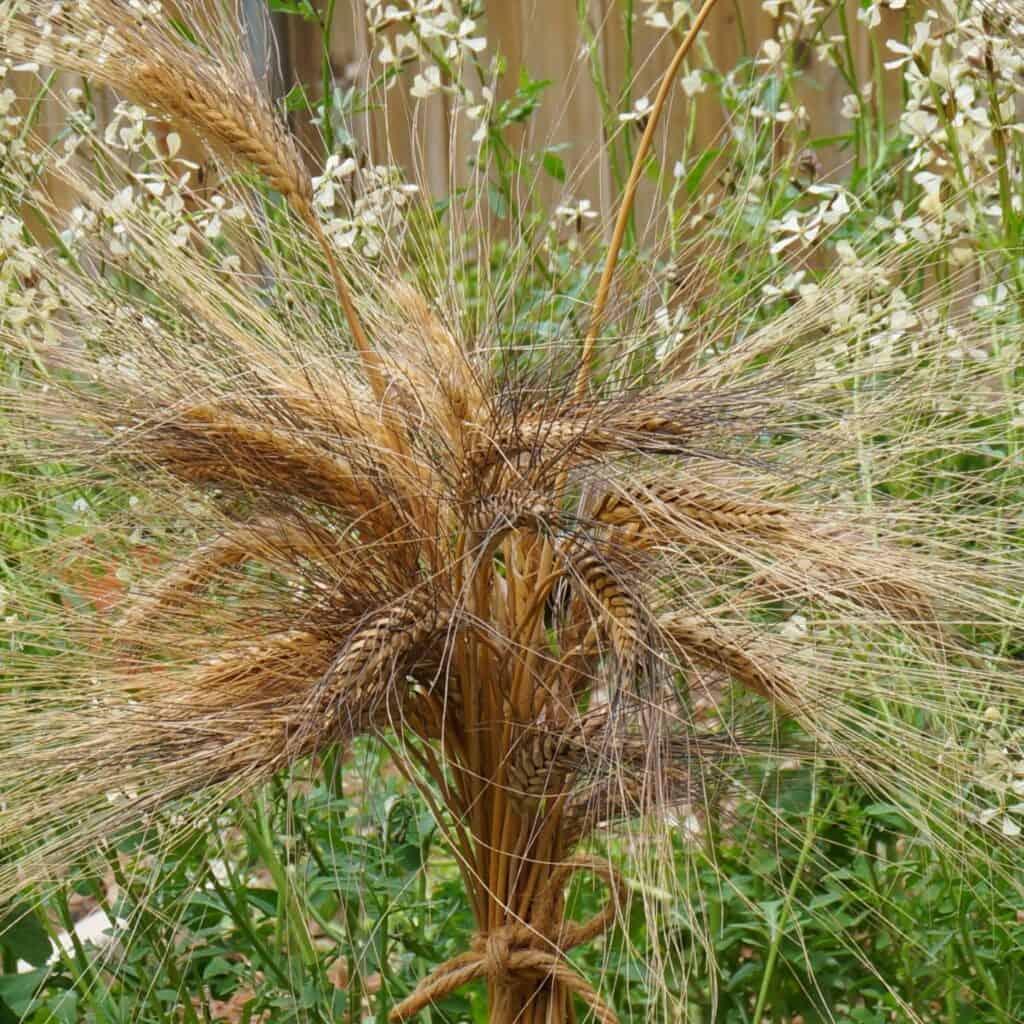
In His crucifixion about to unfold, He satisfied Eden’s death warrant and liberated us to eat the Bread of heaven, restoring us to God’s voice. Hallelujah!
Learn more about growing wheat in your garden – visit the Garden in Delight Plant Guide
Grapes and Being Fruitful
Likewise, Jesus ensured that Eve’s curse was reversed, proclaimed in grapes.
All the while that fruit trees filled the garden, they resounded the design of the Lord to increase through generations; indeed, “seed,” “offspring,” and “descendants” are dimensions of the same Hebrew word, zera’, showing His heart’s desire to cascade His love and fill the earth. “Seed-bearing” is analogous to “offspring-bearing” or childbearing, bestowed upon women to carry the loving move of the Lord to multiply. And as women carry children in their womb, they form a sort of “abide in me” likeness in Jesus’ grapevine revelation:
“I am the true vine, and My Father is the gardener…Abide in Me, and I will abide in you. The branch cannot itself produce fruit, unless it abides on the vine. Likewise, you cannot produce fruit unless you abide in Me. “I am the vine; you are the branches. The one who abides in Me, and I in him, bears much fruit; for apart from Me, you can do nothing.…” John 15:1, 4, 5 TLV
It is no wonder that Eve’s curse struck at the heart of this assignment:
To the woman he said: I will greatly increase your pain in childbearing. With painful labor you will give birth to children. Your desire will be for your husband, but he will rule over you. Genesis 3:16 EHV
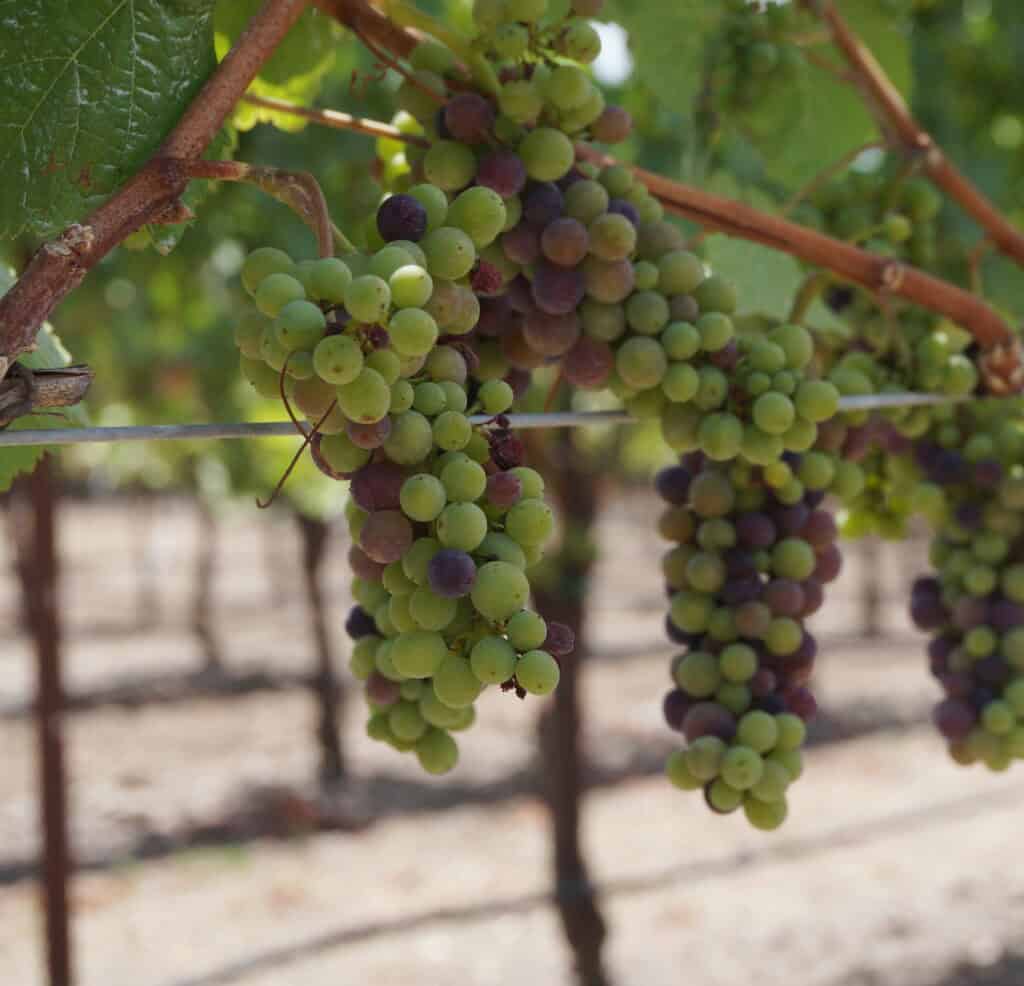
In His crucifixion about to unfold, Jesus pours out forgiveness, restoring us to life in His Spirit and its fruitfulness, graces to nurture relationships and bind up broken hearts.
Learn more about growing grapes in your garden – visit the Garden in Delight Plant Guide
Restoration Begins
Yet preparing the way for Jesus’ dinner among friends and Communion eve had been hints of His restoration coming, found in these Scriptures of work and womanhood:
The man named his wife Eve (life spring, life giver), because she was the mother of all the living. Genesis 3:20 AMP
There is nothing better than for people to eat and drink and to see the good in their hard work. These beautiful gifts, I realized, too, come from God’s hand. Ecclesiastes 2:24 VOICE
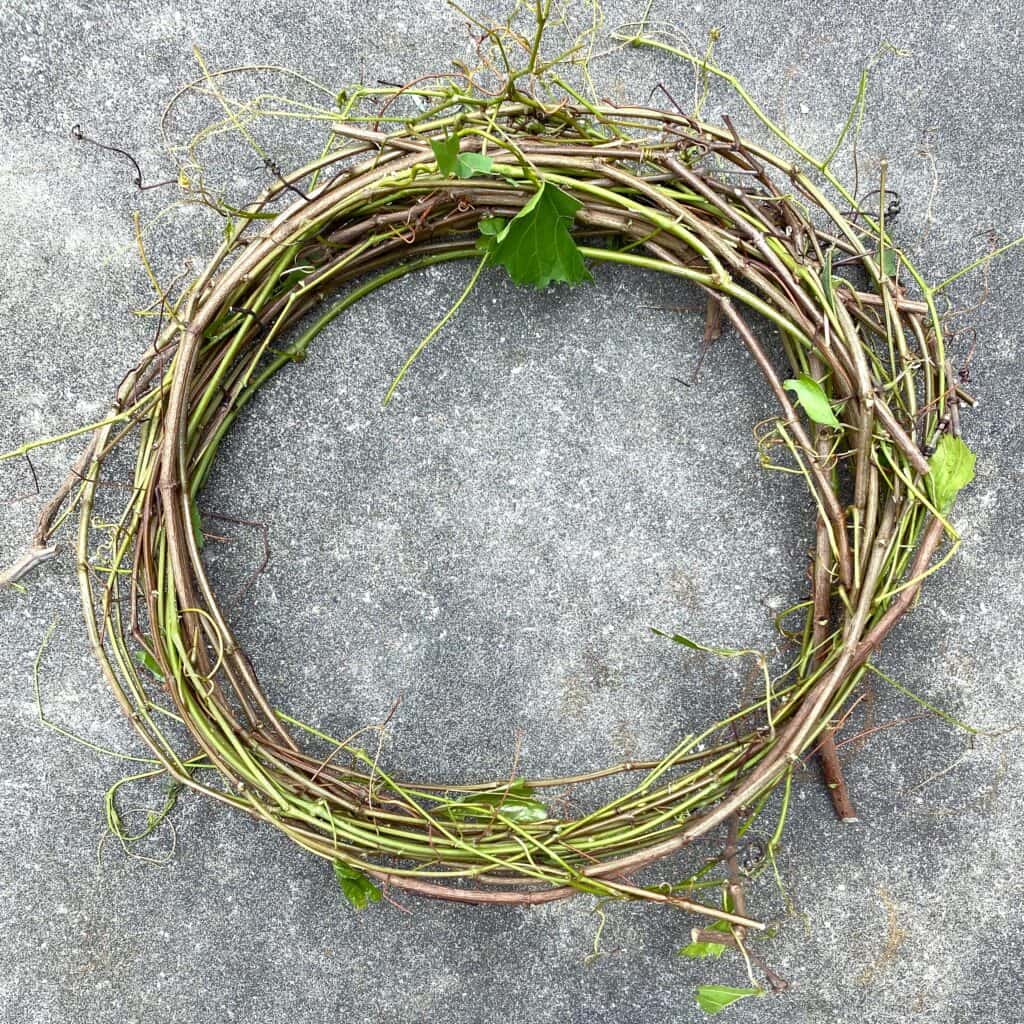
Your wife will be like a healthy vine producing plenty of fruit, a spring of life in your home. Psalm 128:3 VOICE
Be strong and courageous, and do the work. Do not be afraid or discouraged, for the Lord God, my God, is with you. 1 Chronicles 28:20 NIV
She considers a field and buys it. From the fruit of her hands she plants a vineyard. Proverbs 31:16 TLV
Come, let us return to the Lord. He has torn us to pieces but he will heal us; he has injured us but he will bind up our wounds. After two days he will revive us; on the third day he will restore us, that we may live in his presence. Hosea 6:1-2 NIV
The Communion meal is a coming back around to the Garden, a restoring move reminding us that Jesus has overcome the curse of sinfulness with His forgiveness, satan strikes the heel but Jesus heals! He is our “Garden-to-Table” host, inviting us to let His love-life flow through us, blessing us in good works and fruitfulness, living with Him.
Closing Prayer:
O Father, thank You! Thank You for bringing me back to You, for restoring me to life with You. Because of You, I can exchange my sinfulness for Your forgiveness and enter into Your fruitful ways. This is as basic as bread on the table! Help me to linger with You and “abide”—show me what this looks like in my life, show me how. You invite me to come to You; let me hear Your voice and stay close to You, thriving in Your love. Lord, may Your restoration pour through my life! Let me give thanks for the broken pieces like You did and offer them to You for blessing and healing. Let my relationships be grounded in You. Let my work flow from the fruitfulness of Your Spirit. Once again, thank You! In Jesus’ Name, Amen.
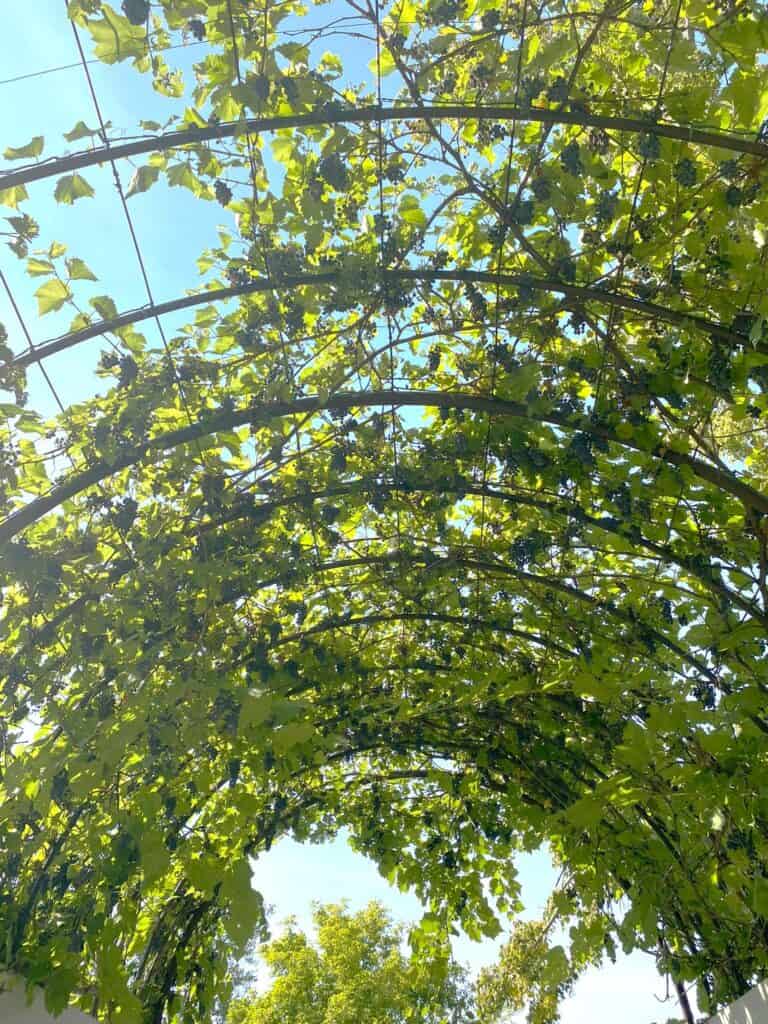
I love each of you with the same loves that the Father loves me. You must continually let me love nourish your hearts. If you keep my commands, you will live in my love, just as I have kept my Father’s commands, for I continually live nourished and empowered by his love. My purpose for telling you these things is so that the joy that I experience will fill your hearts with overflowing gladness! So this is my command: Love each other deeply, as much as I have loved you. John 15:9-12 TPT

The Plants of Jesus’ Path is a 7-week study of plants as a way of cultivating a deeper appreciation for our Savior in the days leading to His crucifixion. These botanical touchpoints are met through tangible, scent-filled, tasty or intriguing branches, fruits, roots, trees or shrubs that give us something to grasp in a story hugely ungraspable. They are planted in key places to reveal the immensity of our Savior’s grace, showing us converging prophecy and backstory to understand who He is and what He has done for us. Imagine the Stations of the Cross coming to Passover Dinner! Encounter palm branches, wheat & grapes in bread & wine, fig tree, spikenard, olive trees, thorns, and hyssop with the garden as your guide to a refreshed heart, ready to celebrate the Resurrection.

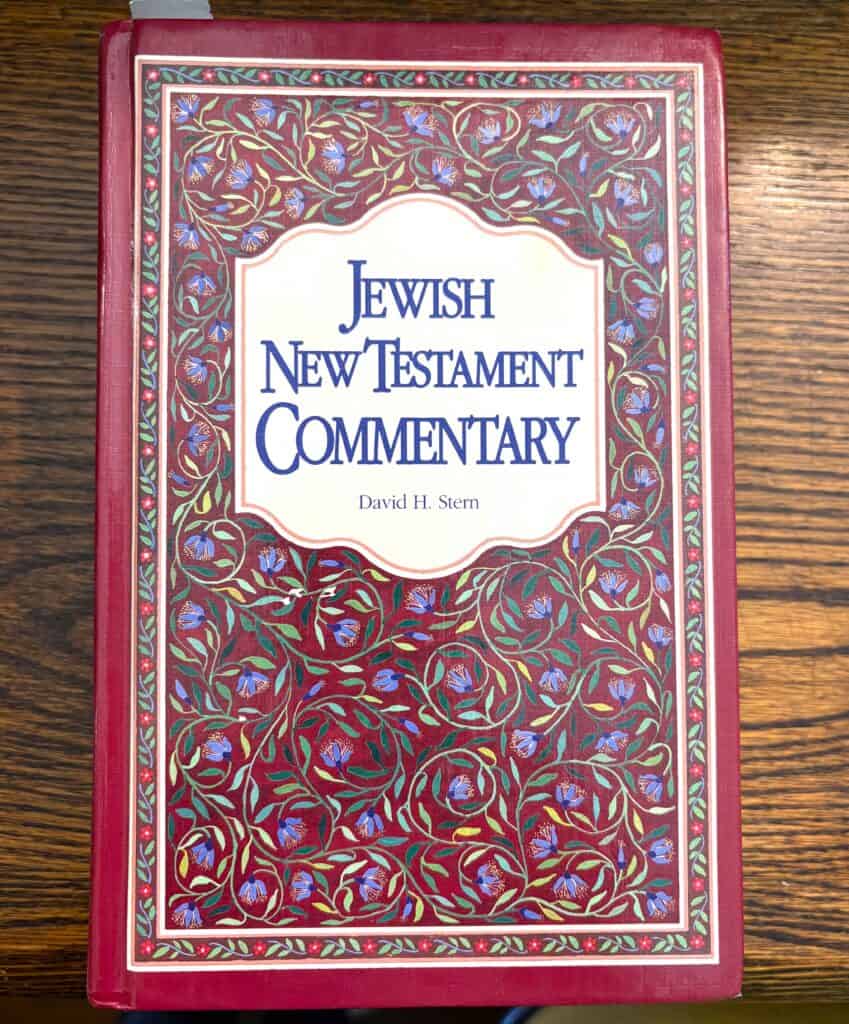
Many thanks for John 6:51-66 insight by David H. Stearn, author of Jewish New Testament Commentary (Clarksville, Maryland: Jewish New Testament Publications, 1992), pages 173-74.
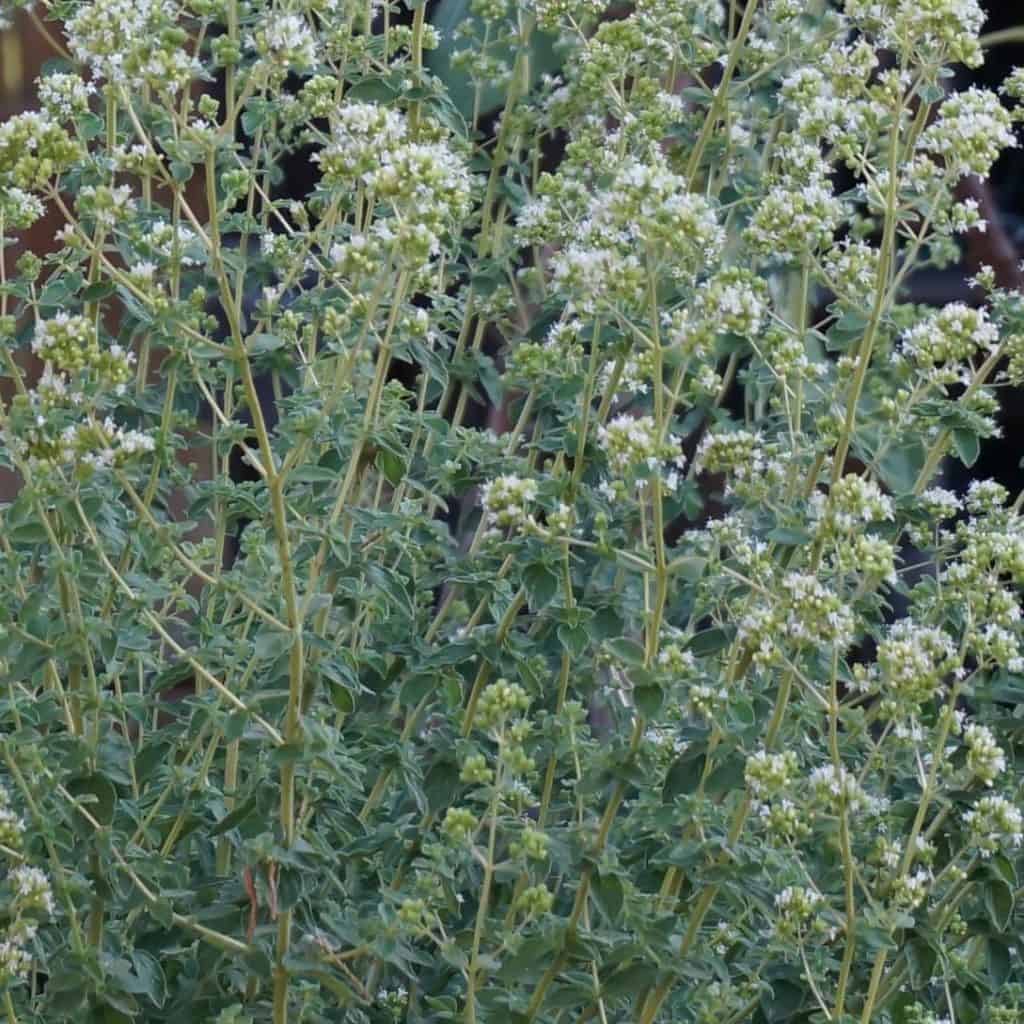
For further reading: Find a measure of God’s restoration in the garden in Garden Calling; for another view of Communion in the garden, read Garden Communion; or ponder this: A Garden Named for Jesus; or perhaps you have experienced God’s Presence in your garden, as detailed here: Garden Glimpses of God; more on the amazingness of seeds in the Bible: Zera’ & Seed Saving
BTW we journeyed through a whole series on bread together in 2025! Refresh in A Lenten Look at Bread
Delight yourself in more poetry to take in the fullness and beauty of God’s Word in The Vinedresser’s Creed and W is for Wheat, from the A-to-Z Primer of Plants from God’s Word

Learn more about growing Grapevine and Wheat in the Garden in Delight Plant Guide
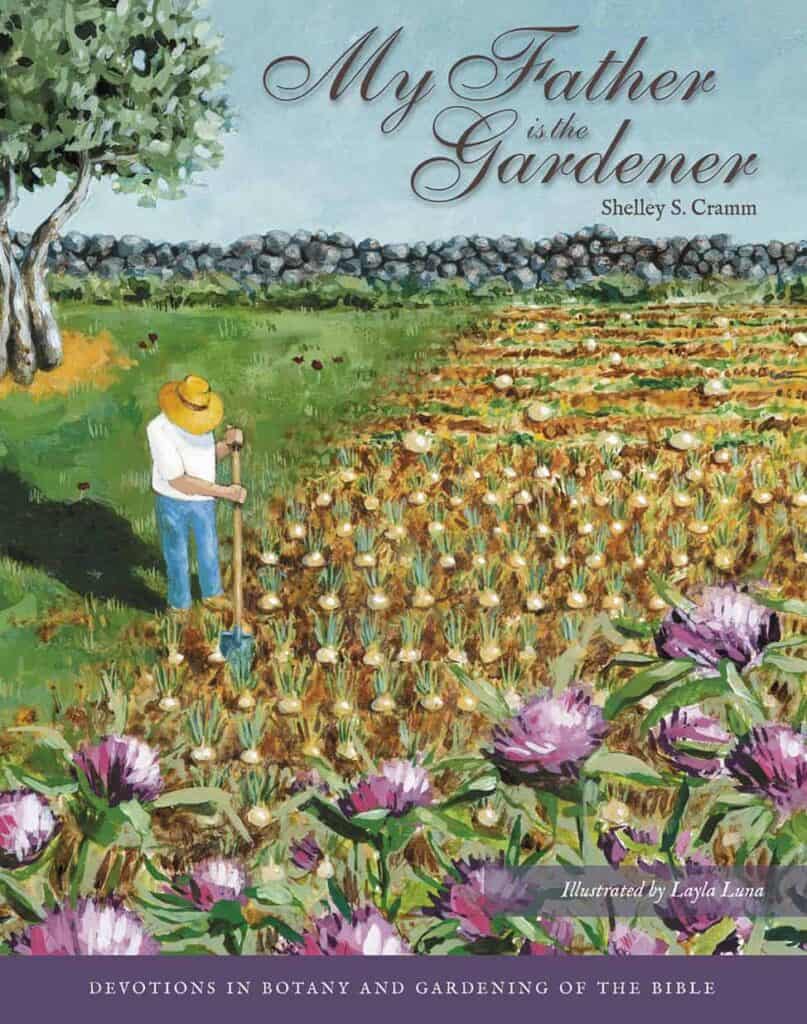
Do you enjoy connecting your garden work to God’s Word? My Father is the Gardener is a devotional book for you, treat yourself for Lent (ooops!). Makes a great gift for the gardener, too!
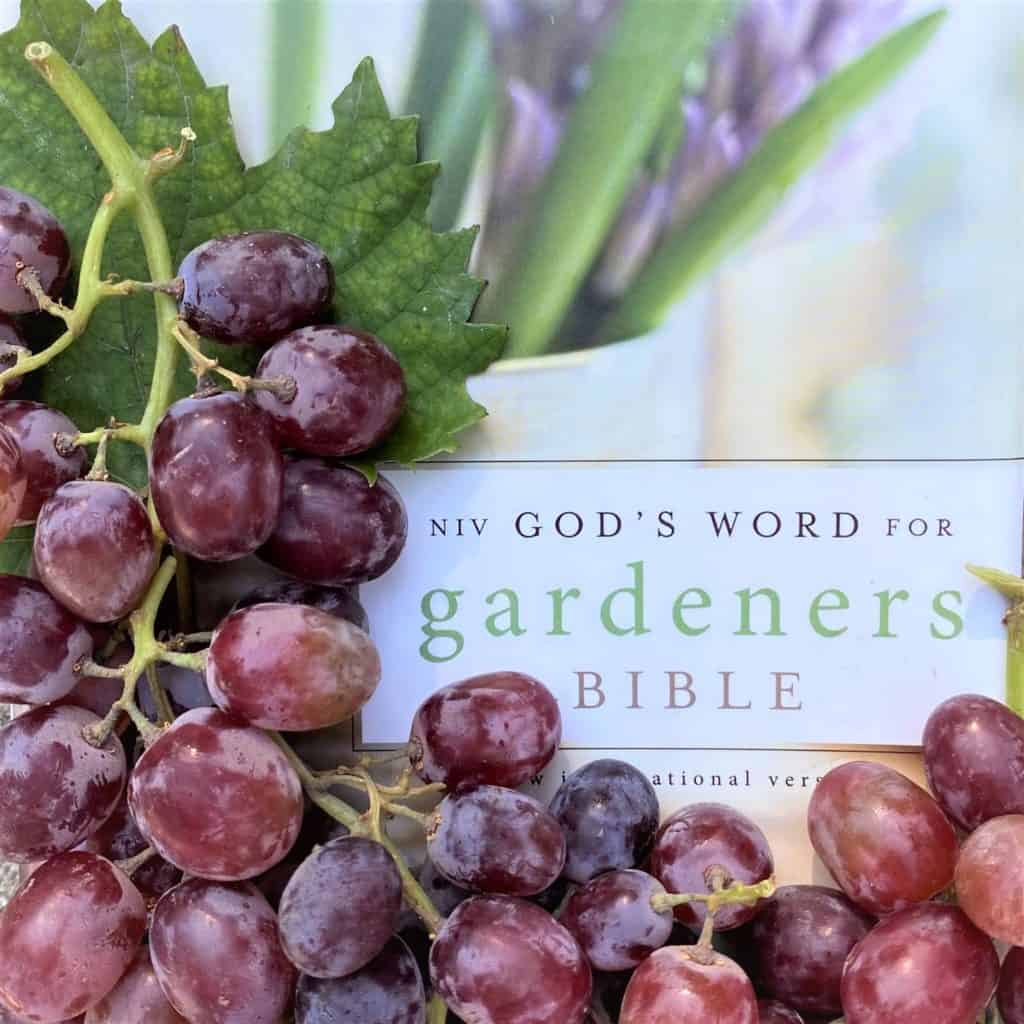
Read more on grapevines in the devotions series Away from the Last Supper beginning on page a-46, and find wheat Celebrate the Harvest series beginning on page a-36 in God’s Word for Gardeners Bible,
Photo Credits: ©Shelley S. Cramm
AMP notes Scripture quotations taken from the Amplified® Bible, Copyright © 2015 by The Lockman Foundation. Used by permission. www.Lockman.org
CJB notes Scripture quotations taken from the Complete Jewish Bible by David H. Stern. Copyright © 1998. All rights reserved. Used by permission of Messianic Jewish Publishers, 6120 Day Long Lane, Clarksville, MD 21029. www.messianicjewish.net.
EHV notes Scripture quotations taken from The Holy Bible, Evangelical Heritage Version® , EHV®, © 2019 Wartburg Project, Inc. All rights reserved. Used by permission.
ISV denotes Scripture quotations from The Holy Bible: International Standard Version. Release 2.0, Build 2015.02.09. Copyright © 1995-2014 by ISV Foundation. ALL RIGHTS RESERVED INTERNATIONALLY. Used by permission of Davidson Press, LLC.
The Message denotes Scripture quotations taken from THE MESSAGE, copyright © 1993, 2002, 2018 by Eugene H. Peterson. Used by permission of NavPress. All rights reserved. Represented by Tyndale House Publishers, a Division of Tyndale House Ministries.
NIV denotes Scripture quotations taken from the Holy Bible, New International Version®, NIV®. Copyright © 1973, 1978, 1984, 2011 by Biblica, Inc.® Used by permission of Zondervan. All rights reserved worldwide. www.zondervan.com The “NIV” and “New International Version” are trademarks registered in the United States Patent and Trademark Office by Biblica, Inc.®
NMB designates Scripture quotations from the New Matthew Bible, of which only the New Testament is published at the date of this publication, © 2016 under the title “The October Testament.” Used by permission of Ruth Magnusson Davis, Founder and Chief Editor of Baruch House Publishing.
TLV denotes Scripture quotation taken from Tree of Life (TLV) Translation of the Bible. Copyright © 2015 by The Messianic Jewish Family Bible Society.
TPT denotes Scripture quotations taken from The Passion Translation®. Copyright © 2017, 2018, 2020 by Passion & Fire Ministries, Inc. Used by permission. All rights reserved. ThePassionTranslation.com
VOICE denotes Scripture quotations taken from The Voice™. Copyright © 2012 by Ecclesia Bible Society. Used by permission. All rights reserved.


