Reading through the latter passages of Exodus and God’s detailed designs for the Tabernacle, has the question crossed your mind, dear gardeners, why acacia wood?
“You are to make the framework of boards for the Tabernacle from acacia wood, standing upright… Also make crossbeams of acacia wood…You are to hang it on four pillars of acacia overlaid with gold…You are also to make for the screen five pillars of acacia, and overlay them with gold… Exodus 26:15, 26, 32, 37 TLV
Repeatedly, this unique tree was requested to be the lumber for creating the intimately crafted tent where the Lord would dwell with His people. The Tabernacle, or Dwelling, would be the place to worship the Lord, tended to by Aaron’s lineage of priests, a place of sacred meeting to bring offerings to the Lord and make atonement for sins. Tent poles, crossbeams, carrying poles, table, altar, and walls were all assembled from acacia wood, structured to shelter the acacia-overlaid-in-gold ark, covered by the solid gold mercy seat (Exodus 25:17).
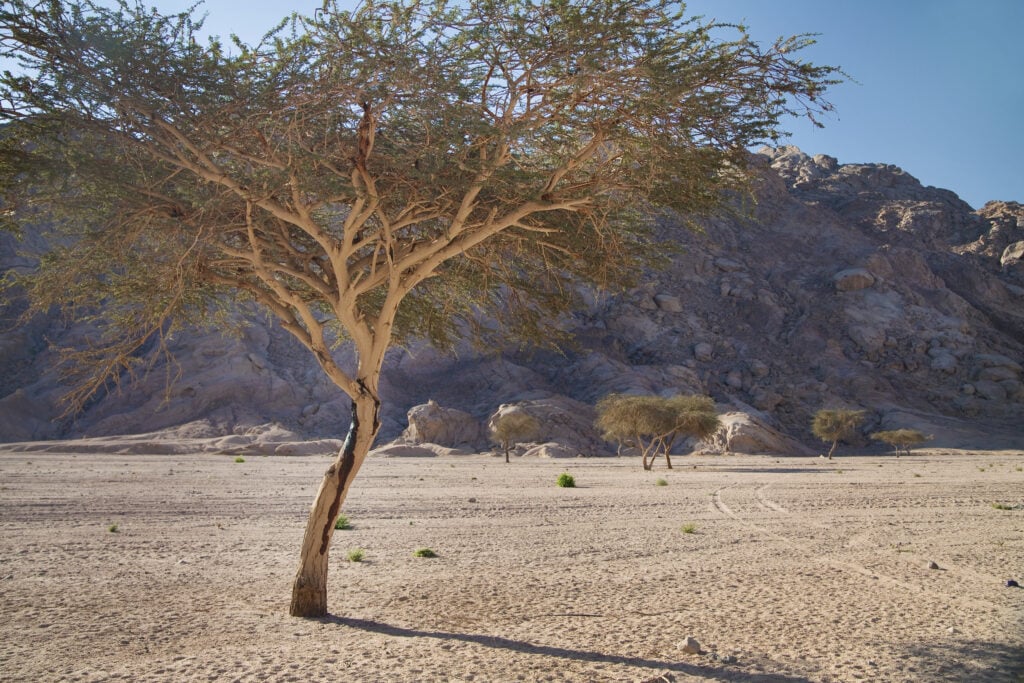
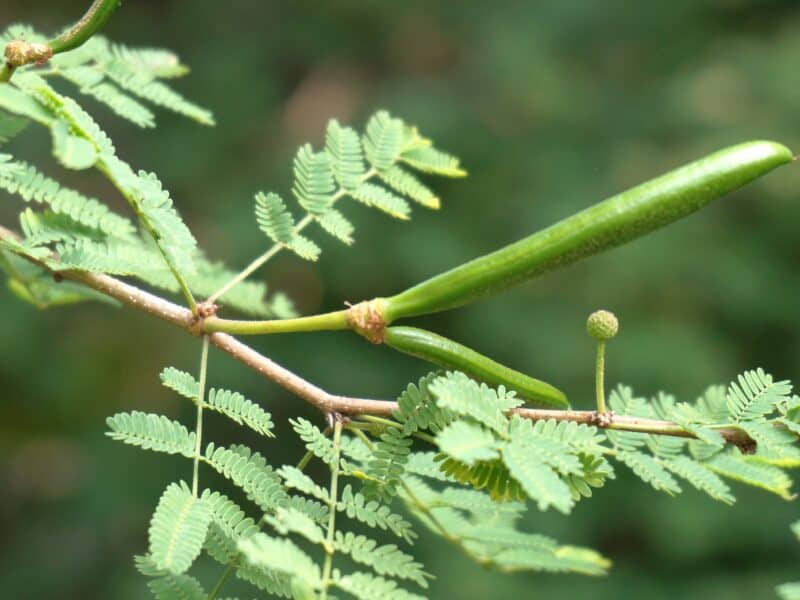
At first glance, requesting acacia wood seems obvious. Acacia raddiana was the leading species of tree in the sparse Sinai landscape, temporary home to the wandering Israelites where the Tabernacle first came together. However, the demands of radiant exposure and rainless climate make for shorter, contorted tree growth here, shifting the storyline in an obscure way. In his book Torah and Flora, Rabbi Rabinowitz leads us into a bit of botanical mystery:
Whoever has the opportunity to traverse the Desert of Sinai, as so many have since the Six-Day War, will surely have noticed that practically the only trees which grow in that inhospitable region…are the stunted and gnarled acacia trees….[yet] I examined tree after tree; I could not see even one which could provide even the standard-sized planks which were “twenty cubits long and one and a half wide…”
Louis I. Rabinowitz, Torah and Flora, 1977, pages 57-58
Therefore, reasoned Rabbi Rabinowitz, the acacia wood must have been “ready prepared” among the Israelites’ possessions, not felled from their surroundings. Rather, the stunning treasury of these desert refugees—gold, silver, bronze, fine linen, precious stones and gems, dyed yarn, animal hides and leather, spices and olive oil—included acacia lumber, the wood summoned as the structure for the Tabernacle.
The Rabbi challenges us to dig deeper in the meaning of amad, the Hebrew word for “standing or upright,” usually understood as describing the stature of the wood (Exodus 25:15). He discerned an insightful nuance, the meaning “ready prepared,” in the sense of standing before or being presented for service. The following Scriptures show amad translated in this manner:
Joseph was thirty years old when he ·began serving [L stood before the Pharaoh] the king of Egypt. Genesis 41:46 EXB
A single command from His lips, and all creation obeyed and stood its ground. Psalm 33:9 VOICE
Relaying traditions of Talmudic teaching, the Rabbi concluded that the acacia wood was a possession of the children of Israel until its appointed service, that is, until it was time for the wood to stand, sheltering the treasure of the Lord, His Presence, and atoning sacrifices. The lumber would not have been sourced from their surroundings in the desert, but brought with them from Egypt, perhaps brought to Egypt originally from the land of their ancestors.
Which Species, Then?
Acacia albida, now classified as Faidherbia albida, is another acacia species found further north in Israel (and south into Africa), along the Jordan River, reaching heights that would yield the lengths of lumber needed for the Tabernacle framework.
Migdal Zevaya is in the Jordan Valley near the mouth of the Yarmuk, and to this day a small grove of the Acacia albida, a tall tree with thick trunk, which could have provided planks of the requisite size, grows there.
Louis I. Rabinowitz, Torah and Flora, 1977, page 58
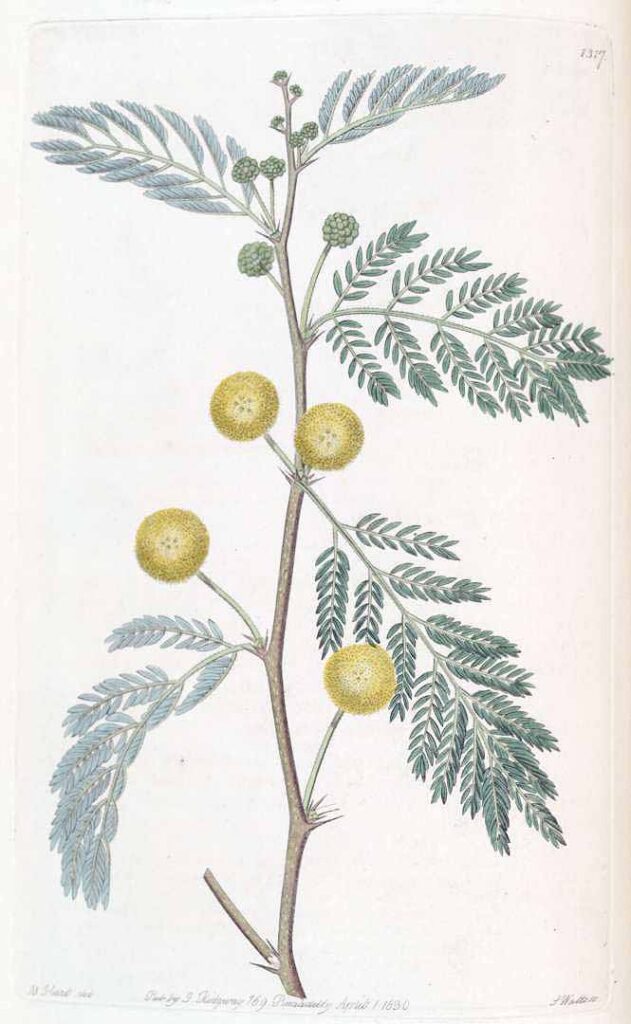
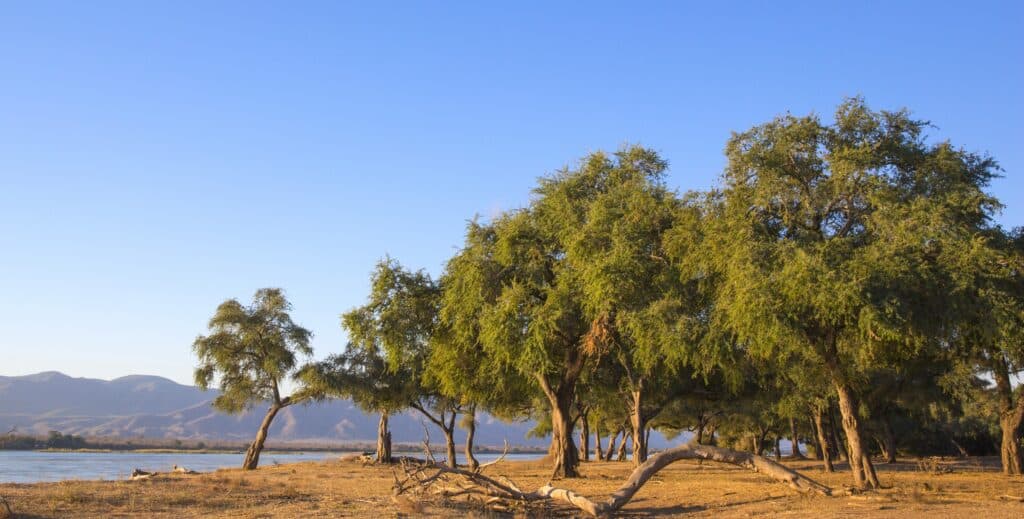
Known in Africa as Ana tree, winter crown or white acacia, Acacia albida, from the Leguminosae or Fabaceae or bean family, grows 50 to 80 feet tall, with a rounded, asymmetrical, deciduous canopy, set apart from the flat-topped trees of Sinai. Muted tones of this species include light gray bark, blue-green leaflets, and creamy pom-pom flowers, which bloom in early spring. Bean pods, characteristic of this family, form after flowering with a chunky, crinkled appearance in caramel brown, about 4 inches long. Branches are fortified with one-inch thorns at leaf bases. Rabinowitz reports that the timber of A. albida is lightweight compared to other typically dense acacia wood, perhaps easier for carrying and assembling the portable Tabernacle.
click here for more information on Acacia albida/Faidherbia albida from The Useful Tropical Plants Database, and click here to see more images from the work of Dr. Lytton Musselman, Old Dominion University Plants of the Bible
Atoning Acacia Wood
While the detailed accounts in Exodus show acacia wood integral to preparing the place of atonement for the sins of God’s people, acacia wood became an actual place of atonement – how God’s Word reiterates in poetic, prophetic ways!
Shittim, the Hebrew word for acacia, was also the name of a hamlet in the ancient Holy Land near Jericho and the Jordan River, where the Israelites camped before entering the land promised to them. At this location, we read about a horrible moment of turning from God’s holiness as the people wallowed in sexual immorality with the locals, engaging in profane practices of their false gods (Numbers 25:1-6, Galatians 5:19-21). What?! After all this desert time in the Lord’s Presence?!
One man, priest Phinehas, stood up to the wantonness, stabbing a philandering couple and shutting down the scandalous scene. The Lord accepted his act and his fierceness for the Lord’s honor as atonement for the outrageous outbreak.
“…Therefore, say, ‘I establish my covenant of peace with him. He will have it, and his descendants after him, as a covenant for an everlasting priesthood. He was zealous for his God, and he made atonement for the people of Israel.’” Numbers 25:12-13 NCB
Therefore, what do we see in the acacia tree? We see geography and a whorl of prophecy.
The choice of shittim wood for the Sanctuary was to make atonement for the profanity of the Shittim place.
Louis I. Rabinowitz, Torah and Flora, 1977, page 60
Acacia Tree Prophecy
The call for shittim, acacia wood—structured for meeting the Lord, housing His Presence, presenting offerings and performing atonement—precedes the place, Shittim, of making atonement. Where great sin would need atonement, where the action of one would atone for all, we have acacia to mark the call.
In turn, Phineas stood as a call to Christ, the One whose action atones for all.
That’s why he [Jesus] had to be like his brothers and sisters in every way, so that he might become a merciful and trustworthy high priest in God’s presence, to make atonement for the sins of the people. Hebrews 2:17 NTFE
Then the priest is to make atonement for him in the Lord’s presence, and it will be forgiven him regarding whatever he did. Leviticus 6:7 ISV
Help us, O God of our salvation, for the glory of your name; deliver us, and atone for our sins, for your name’s sake! Psalm 79:9 ESV
As for our transgressions, You will provide atonement for them. Psalm 65:3 NKJV
Then Phinehas took a stand and intervened, so the plague was stopped. And God saw what he did and considered him righteous, a man to be honored by all generations forever. Psalm 106:30-31 VOICE
For we are God’s masterpiece, created in the Messiah Jesus to perform good actions that God prepared long ago to be our way of life. Ephesians 2:10 ISV
Moses gave us the Law, but Jesus the Anointed One unveils truth wrapped in tender mercy. John 1:17 TPT
I pray that the Father of glory, the God of our Lord Jesus Christ, would impart to you the riches of the Spirit of wisdom and the Spirit of revelation to know him through your deepening intimacy with him. Ephesians 1:17 TPT
Closing Prayer
O Lord, Your Word is full of mystery, and its key seems to be botany! So perhaps You called for acacia wood in what looks to be a backwards way to us: before the atonement needed at Shittim, acacia wood was summoned to the sanctuary to shelter and uphold the priests’ atonement. Hmmm. Give us eyes to see Your moves—the ways and places You have gone before us, and the ways we wander around to Your precise appointment. Thank You, Jesus, for atoning for my sins. You are my Phinehas and so much more. Now let me stand before You, ready prepared, amazed at Your compassion and loving-kindness, strengthened to uphold Your upright ways, ready to embrace You, mystery and all. In Jesus Name, Amen.
Remember all those stories about Shittim and Gilgal. Keep all God’s salvation stories fresh and present. Micah 6:5 The Message

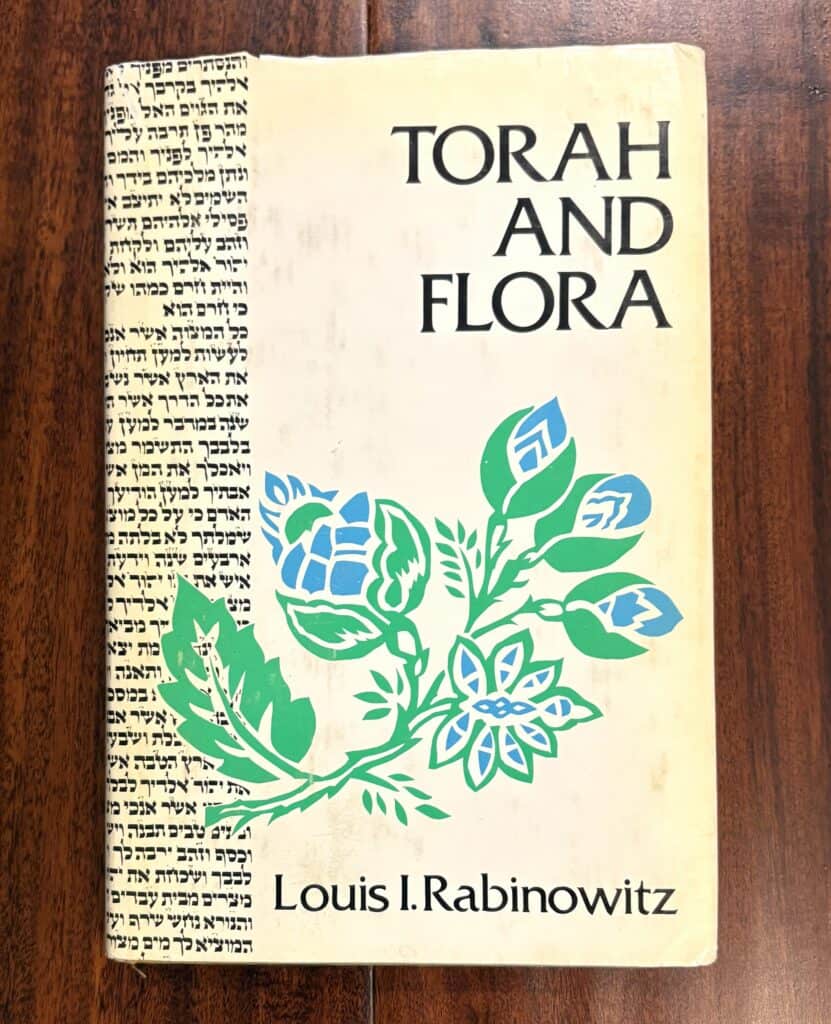
This post was completely inspired by this classic: Louis I. Rabinowitz, Torah and Flora (New York: Sanhedrin Press, 1977), pages 55-60.
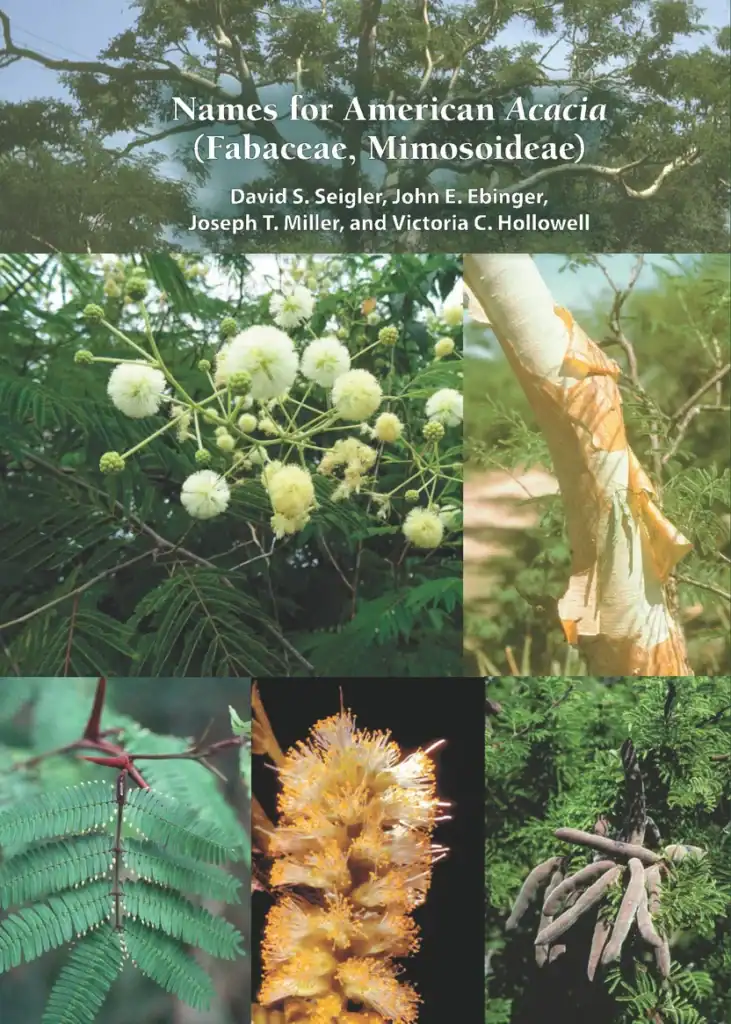
Interested in the Acacias that are native to America? Check out Names for American Acacia recently published by BRIT Press, publishers of My Father is the Gardener.
Do you enjoy learning about plants of the Bible and connecting your garden work to God’s Word? My Father is the Gardener is a devotional book for you!
Engage your gardening love with the Biblical Feasts in these Devotions Blogs: Sounding in the Poplar Trees, Palm Branches Praise, Wanderer, Come Home, Let There Be Light & more
Photo Credits: ©Shelley S. Cramm, detail branch of Acacia raddiana from Rodef Shalom Biblical Garden, Pittsburgh, PA; ©Jacek Sopotnicki | Dreamstime.com ID 23520017 Landscape of Sinai, Egypt, North Africa. Acacia Trees, Mountains and Desert; Acacia albida (Delile), Lindley, John., Edwards’s Botanical Register, vol. 16, plate 1317 (London: James Ridgway, 1830), drawing by M. Hart, taken from www.botanicalillustrations.org; ©Jezbennett | Dreamstime.com ID 42863976 View over the Zambezi river. Ana Trees (Faidherbia albida) by the Zambezi river
ESV denotes Scripture quotations taken from The ESV® Bible (The Holy Bible, English Standard Version®). ESV® Text Edition: 2016. Copyright © 2001 by Crossway, a publishing ministry of Good News Publishers. The ESV® text has been reproduced in cooperation with and by permission of Good News Publishers. Unauthorized reproduction of this publication is prohibited. All rights reserved.
EXB denotes Scripture quotations taken from The Expanded Bible. Copyright ©2011 by Thomas Nelson. Used by permission. All rights reserved.
ISV denotes Scripture quotations from The Holy Bible: International Standard Version. Release 2.0, Build 2015.02.09. Copyright © 1995-2014 by ISV Foundation. ALL RIGHTS RESERVED INTERNATIONALLY. Used by permission of Davidson Press, LLC.
The Message denotes Scripture quotations taken from THE MESSAGE, copyright © 1993, 2002, 2018 by Eugene H. Peterson. Used by permission of NavPress. All rights reserved. Represented by Tyndale House Publishers, a Division of Tyndale House Ministries.
NCB denotes Scripture taken from the SAINT JOSEPH NEW CATHOLIC BIBLE® Copyright © 2019 by Catholic Book Publishing Corp. Used with permission. All rights reserved.
NKJV denotes Scripture taken from the New King James Version®. Copyright © 1982 by Thomas Nelson. Used by permission. All rights reserved.
NTFE denotes The New Testament for Everyone, Third Edition, Copyright © 2011, 2018, 2019 by Nicholas Thomas Wright. The Society for Promoting Christian Knowledge. All rights reserved. Published by Zondervan, 2023. Grand Rapids, Michigan USA www.zondervan.com
TLV denotes Scripture quotation taken from Tree of Life (TLV) Translation of the Bible. Copyright © 2015 by The Messianic Jewish Family Bible Society.
TPT denotes Scripture quotations taken from The Passion Translation®. Copyright © 2017, 2018, 2020 by Passion & Fire Ministries, Inc. Used by permission. All rights reserved. ThePassionTranslation.com
Voice denotes Scripture quotations taken from The Voice™. Copyright © 2012 by Ecclesia Bible Society. Used by permission. All rights reserved.


