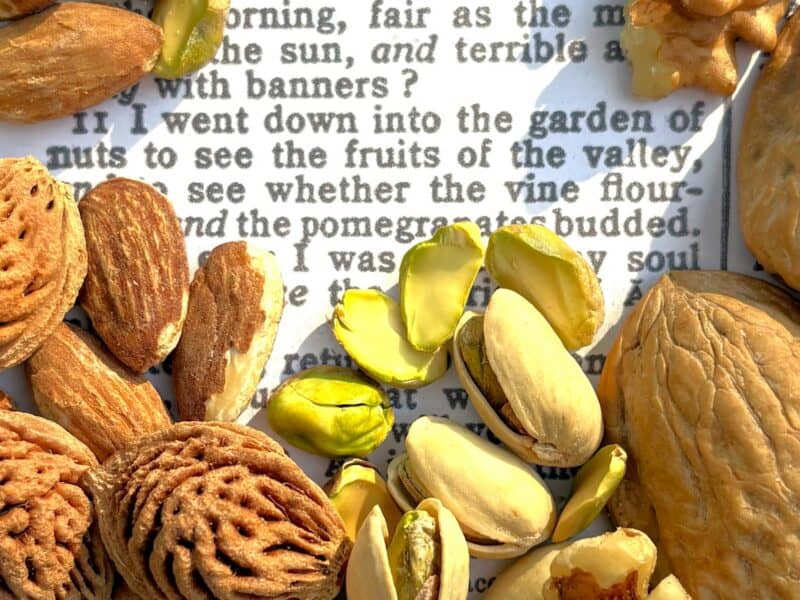
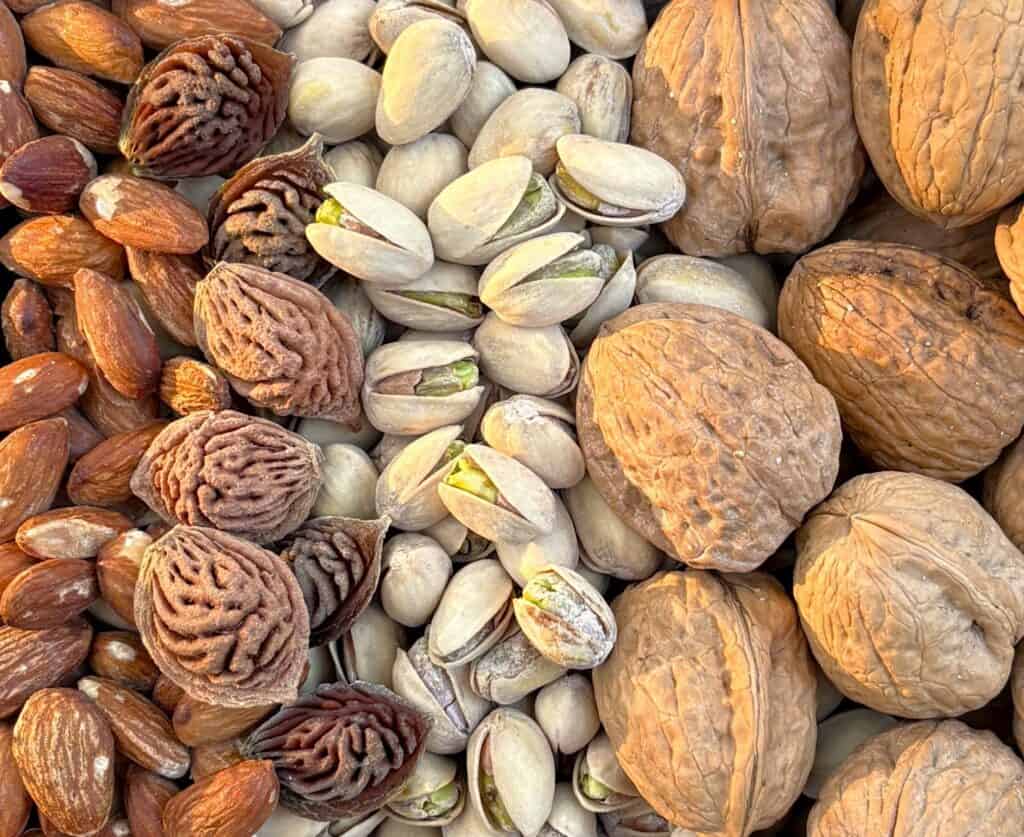
With holiday baking on the horizon, let’s circle back to see where we might find nuts in the Bible. Yes, it is a great time to go crazy over these fruitful trees that bear crunch and flair, not to mention loveliness in the landscape. All the while, almond, pistachio, and walnut trees stand for spiritual realities, connecting us in tasty reminders to the ways of God.
Almonds and pistachios quickly captured my heart while researching and writing God’s Word for Gardeners Bible and have been featured over the years in Devotions Blogs. Yet walnuts are new to me. Who slipped them into this springtime Scripture in Song of Songs? LOL, I just didn’t see! With God’s Word, there are always new discoveries.
I went down to the grove of walnut trees and out to the valley to see the new spring growth, to see whether the grapevines had budded or the pomegranates were in bloom. Song of Songs 6:11 NLT
Walnuts join old favorites, the foraged gifts from Israel’s best:
Put some of the best products of the land in your bags and take them down to the man as a gift—a little balm and a little honey, some spices and myrrh, some pistachio nuts and almonds. Genesis 43:11 NIV
The trio of nuts in the Bible is a crisscross of comparison. The three trees belong to three different botanical families, yet pistachios and walnuts join fellow nuts in their classification, cashews and pecans respectively, while almonds alone grace a most famous flower family, Rosaceae. Almonds and pistachios are spoken of prominently together in the list of “Israel’s best,” whereas walnuts are demure, background scenery to the fruits and spices in King Solomon’s garden love story. Walnuts and pistachios are mentioned only once in the Bible, while almonds cascade layers of meaning and association across many verses and into Jesus’ teachings.
Already, nuts in the Bible cause quite a stir! Let’s survey each species, getting a taste of their horticulture with links to dig deeper in understanding as curiosity leads you.
Almonds
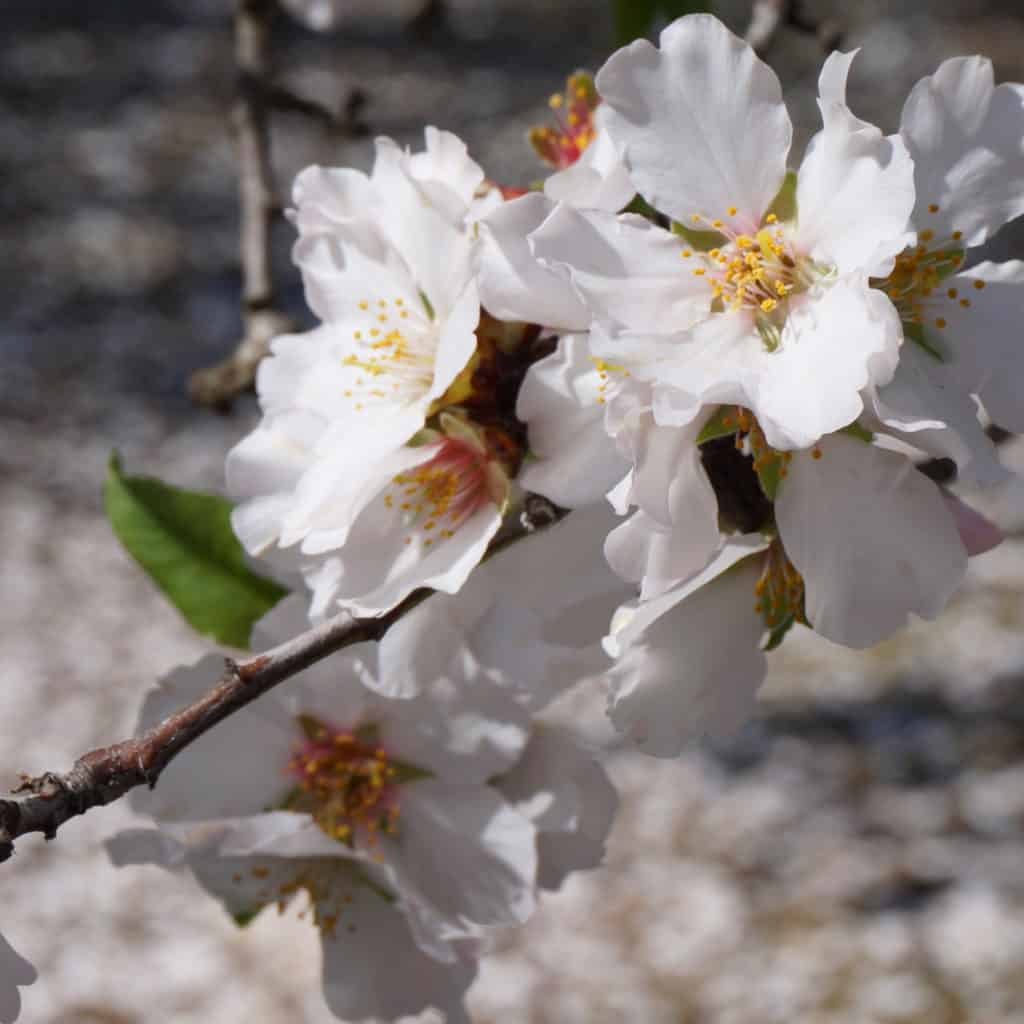
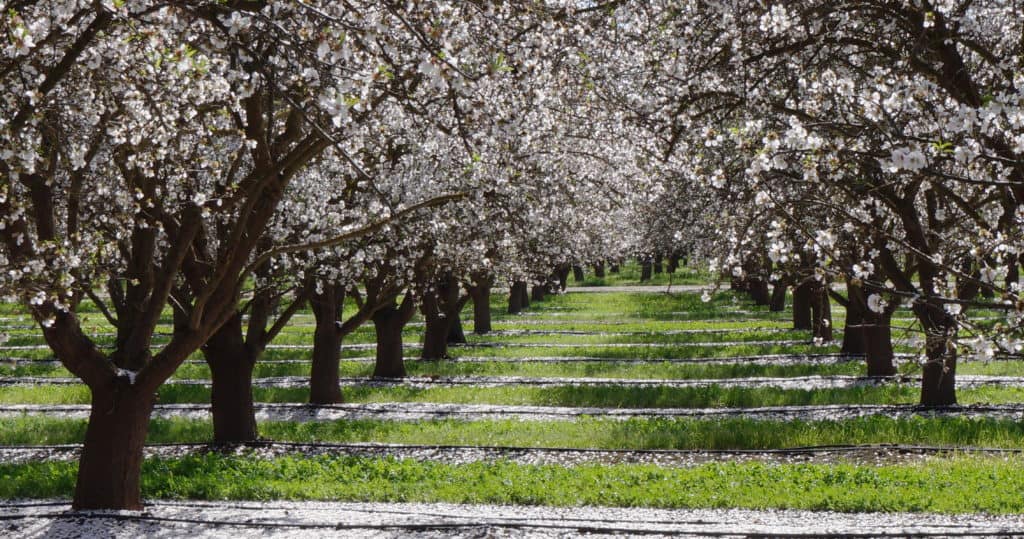
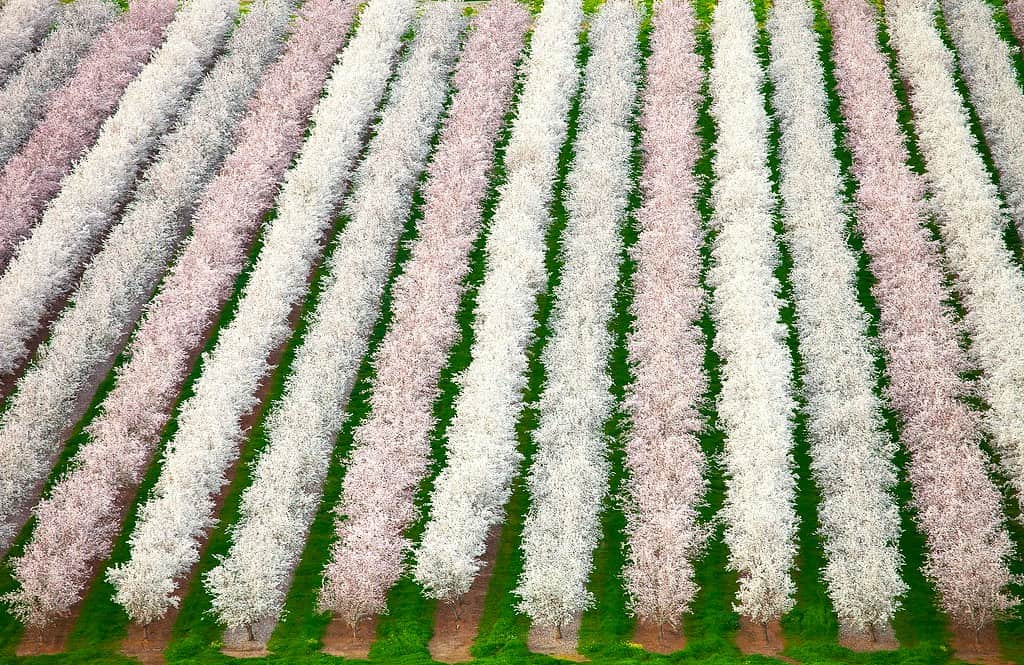
Almonds, Prunus amygdalus or Prunus dulcis, Hebrew word saqed, belong to Rosaceae, the rose family—a fitting designation, since they are known by their blossoming beauty. They are the first tree of the Holy Land to bloom in spring and feed the bees. Almond trees are hardy to zone 7. White, blushed-with-pink flowers cover trees, yielding light-filled canopies, releasing a captivating scent—not almondy smelling, but rosy-floral, a sweet surprise. Warm green, slender, pointed leaves follow the blooms and shelter fuzzy green nut hulls until fall (unless you have unrelenting squirrels!).
Visiting an orchard in spring to take in buzzing bees, gentle, rose-aroma breezes, and petals twirling to the ground like snowfall is surely a heaven-sent call! Almond trees have an overall rounded habit, growing to 30 feet: Heavy pruning required. Trim dense branching to form a strong, open structure at the center of the tree. Trees begin production around their 7th year.
The lampstand had six branches going out from the center stem, three on each side. Each of the six branches had three lamp cups shaped like almond blossoms, complete with buds and petals. Exodus 37:17-19 NLT
Almond blossoms! The adorable flowers, symbols of first sightings, decorated the golden lampstand that illuminated the holy place. Yet there is meaning beyond the practical provision of light for the space, and with almond flowers, we have our horticultural hint. What does God want his people to see [Jeremiah 1:11-12], what insight is he offering, in lighting up the tabernacle and its detailed crafting? The pattern of things to come.
Quoted from “A Lenten Look at Trees: Almond,” Garden in Delight Devotions Blog
Learn more about growing almond trees in the Plant Guide: www.gardenindelight.com/plant-guide/almond/
Dig In: Almonds connect to Scriptural themes of prophecy and poetry. Read Almond’s First Watch and A Lenten Look at Trees: Almond to see more
Pistachios

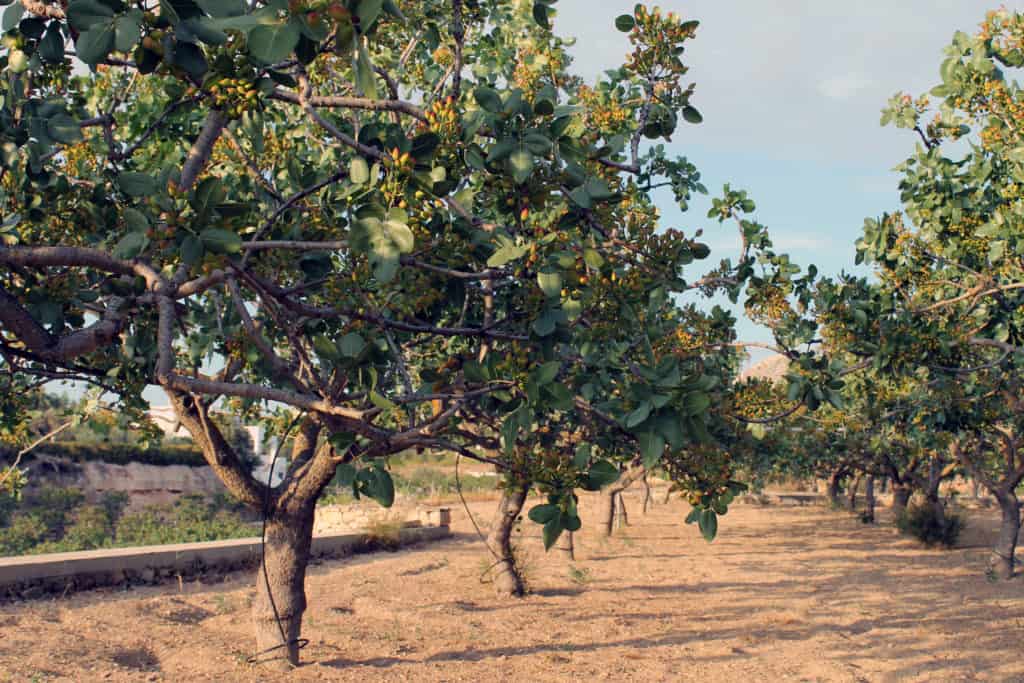
Pistachios, Pistacia vera, Hebrew word batnim, belong to Anacardiaceae, the cashew family, hardy to zone 9. Native to central Asia, pistachios have been cultivated historically from Persia to Israel and southern Europe, although much of their production now comes from California. Low humidity and sunny, rainless summers are ideal for this rustic tree known by its colors. Pistachios are wind pollinated between male and female trees. Tiny, yellowish catkin flowers are petal-less, emerging in clustered puffs with a tint of red in early spring. They form tussles of nut-fruits tucked in pale green hulls on the female trees, dotted among deep green, oval broadleaves.
When hulls change color, turning yellow to blush red, harvest time is here. And when does that iconic, colorful kernel appear? During processing and drying, hulls are removed, and shells naturally split to reveal glimpses of their vivid signature pistachio green. Trees grow to 30 feet with regular pruning to preserve air and light within the canopy. Pistachios begin bearing in 4 to 5 years.
If it has to be, it has to be. But do this: stuff your packs with the finest products from the land you can find and take them to the man as gifts—some balm and honey, some spices and perfumes, some pistachios and almonds. Genesis 43:11 The Message
Pistachio – the little nut with the electrifying green “belly” [the Hebrew root word for pistachio is belly], the fruit’s notable feature coming from its innermost part. Likewise, with the fruit of the Lord’s Spirit [Galatians 5:22-23] filling our soul, we will bear the character of the One deep within us.
Quoted from “A Bearing Fruit Breakfast,” Garden in Delight Devotions Blog
Learn more about growing pistachio trees in the Plant Guide: www.gardenindelight.com/plant-guide/pistachio/
Dig In: Pistachios connect to Scriptural themes of hospitality and the fruit of the Spirit. Read Pistachio Cookies & A Bearing Fruit Breakfast
Walnuts
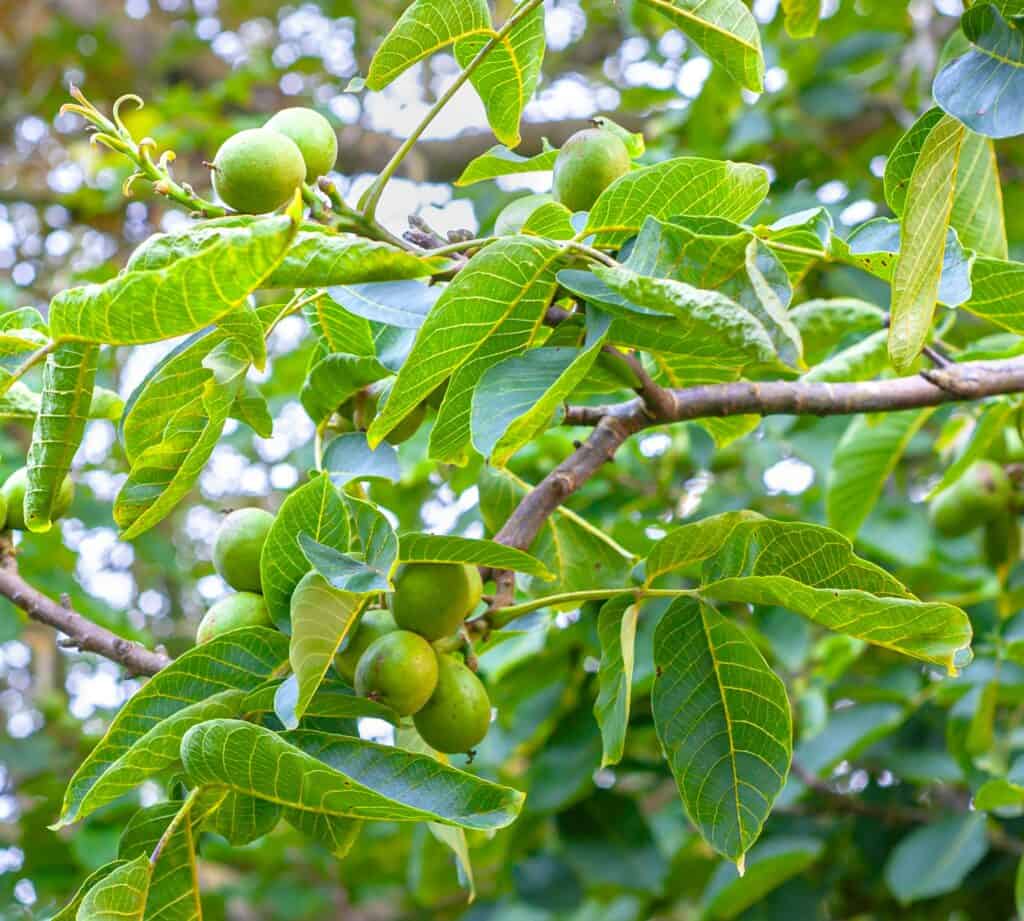
Walnuts, Juglans regia, Hebrew word egoz, belong to Juglandaceae, the walnut family, which includes pecans and hickory nuts. Walnut trees are hardy to zone 7 and make handsome landscape trees, with upright, elegant, dense canopies reaching up to 100 feet in favorable conditions. Catkin flowers growing in clusters appear midspring, yielding soft green, spherical fruits a little bigger than golf balls, grouped together as the summer arrives. Oval, pointed leaves about 6 inches long form in pairs, with a terminal leaf on each leaflet.
And walnut trees are fragrant! Leaves and fruit husks carry a pleasant, “sweet, grassy perfume,” testifies cookbook author Sue Quinn; no surprise to see them mentioned in Song of Songs, the book of scent-sational garden spices and fruits galore. Overall, walnut wood is prized for lumber and furniture-making, nut shells contain tannins used in making dyes, and walnuts are deliciously nutritious for eating and yield a nutty-flavored oil that nourishes skin as well. Best known as an all-around bountiful tree!
I went down to the grove of walnut trees and out to the valley to see the new spring growth, to see whether the grapevines had budded or the pomegranates were in bloom. Song of Songs 6:11 NLT
Just added! Find more information about growing walnut trees in the Plant Guide: www.gardenindelight.com/plant-guide/walnut/
Dig in: Read below a walnut orchard reverie welcoming this Bible plant to the Devotions Blog and highlighting Scriptural themes of prophecy and renewal
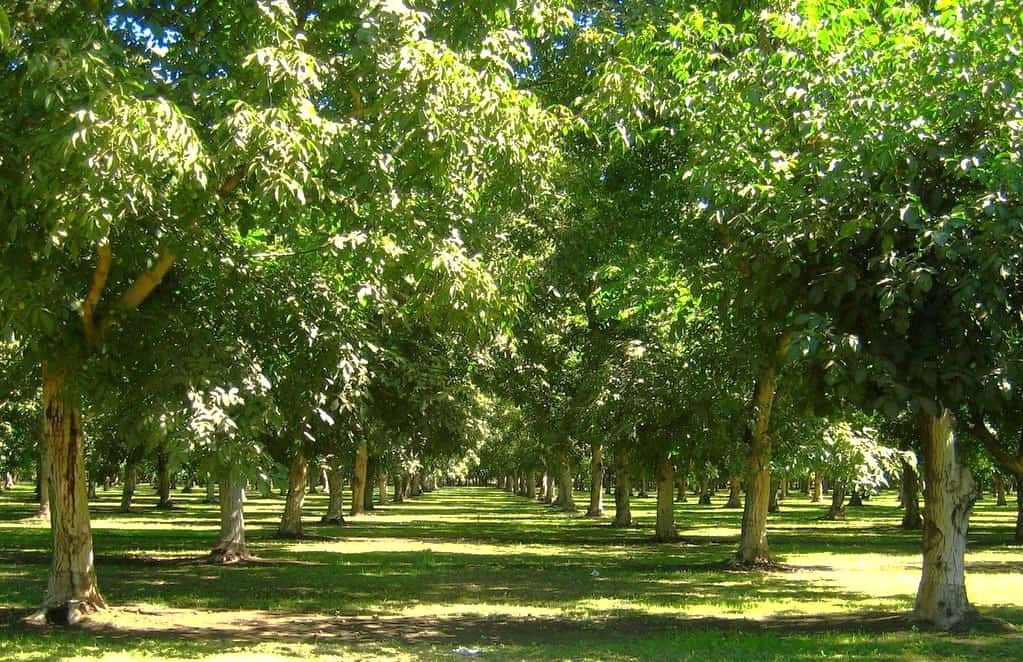
Let’s imagine entering the lovers’ grove of walnuts: The stature of these trees hushes us in quiet wonder. Trees soar overhead, towering up to 100 feet tall, yet grow and mature best from a seed held in hand…as the lovers walk hand in hand…giving their deep taproot its best beginning. Trees are planted at least 60 feet apart, allowing for the spread of their dense, shade-creating canopy, so that the orchard secures a vast space; it is a polkadot forest, a plot of land fortified by handsome branches wafting a welcoming scent, spicing up the scenic experience.
Beholding and imbibing such beauty, it is no wonder the lovers kept moving to see what else the season would bring. Are the grapevines gushing, too? Are the pomegranates making a flower debut? Breathe deep of the metaphor and prophecy here, surrounded in God’s all-dimensional love, perched to watch His Spirit burst out in others.
I longed to know if hearts were opening… Song of Songs 6:11 TPT
Israel, God’s grapevine—
The vineyard of the Lord of hosts is the house of Israel, and the people of Judah are the plant he cherished. Isaiah 5:7 NCB
—we are watching to see you bud and embrace your Righteous Branch, Jesus, and see His wonderful blessing burst out. See? It comes back around to nutty prophecy:
…“What do you see, Jeremiah?” I replied, “I see a branch of an almond tree.” The Lord said to me, “You have seen correctly, for I watch over My word to accomplish it.” Jeremiah 1:11-12 HCSB
Closing Prayer
Dear Lord, thank You for the blessings You put in our lives. You are ready to meet us anywhere, even in simple, true food snacks like the nuts in the Bible, which are still grown and accessible in supermarkets today. I open my heart to You, Lord Jesus, the One who has restored me to God, and embrace Your Word to teach me, guide me, and keep me close to You, even as You nourish me in handfuls of almonds, pistachios, and walnuts. I am happy to be in touch with Your landscape in the work of my hands or in my imagination and be reminded through these wonderful views that You are watching as Your Word is worked out in my life and all around me. I pray for the prevailing of the fruit of Your Spirit; let the godly countenances of love, peace, patience, joy, kindness, goodness, gentleness, faithfulness, and self-control (Galatians 5:22-23) be as bold and vivid in our land as the green “bellies” of pistachio nuts! We pray for Israel to know the fullness of Your salvation in Your Son, Jesus, and we watch for this as eagerly as we wait for spring. In Jesus’ Name, we pray, Amen.
… the fruit of the Spirit is love, joy, peace, patience, kindness, generosity, faithfulness, gentleness, and self-control. There is no law against such things. Galatians 5:22-23 NCB

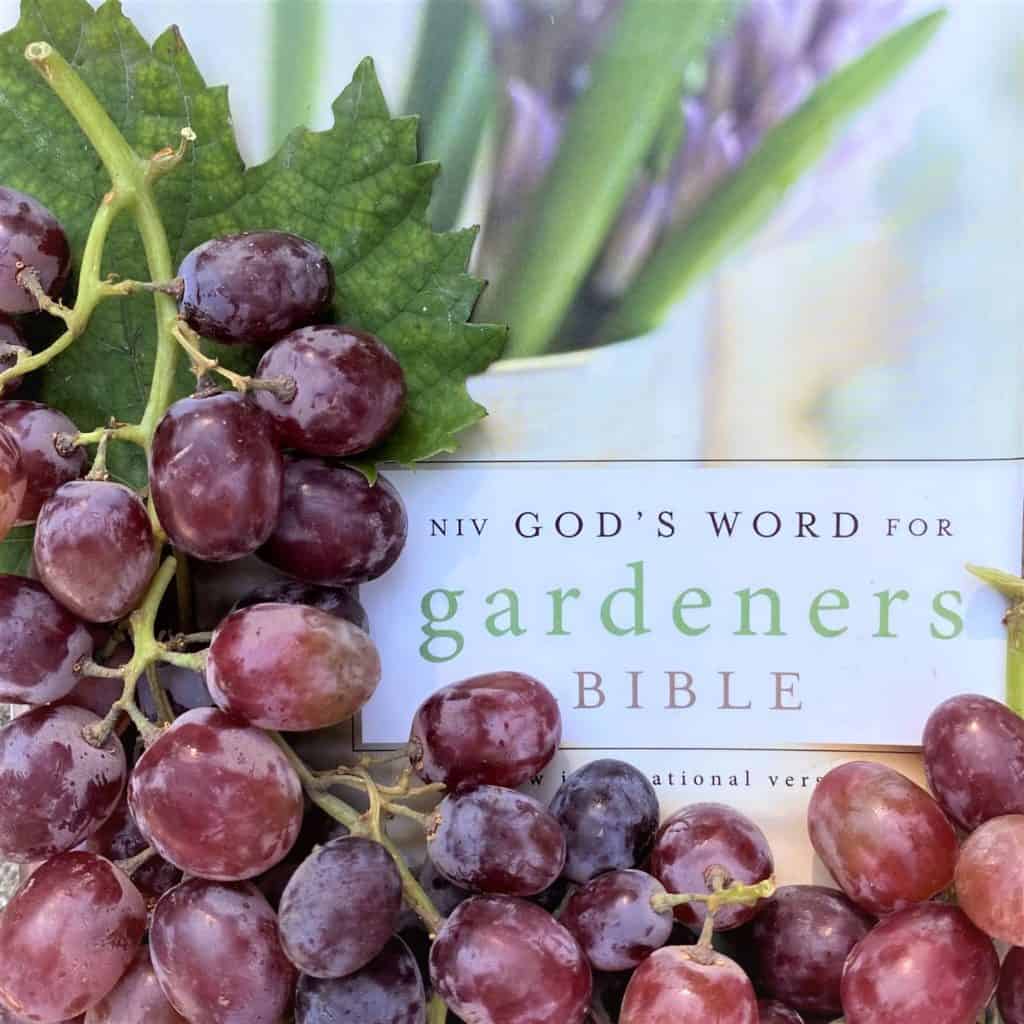
Find more devotions in God’s Word for Gardeners Bible, on almonds in the theme of Flowering beginning on page a-33 and pistachios in the theme of Bearing Fruit beginning on page a-35

Ready to grow more? The Garden in Delight Plant Guide had got you! Find Almonds, Pistachios, and now Walnuts in the Edible Trees section. Link to more Bible Plant Research sources, too!
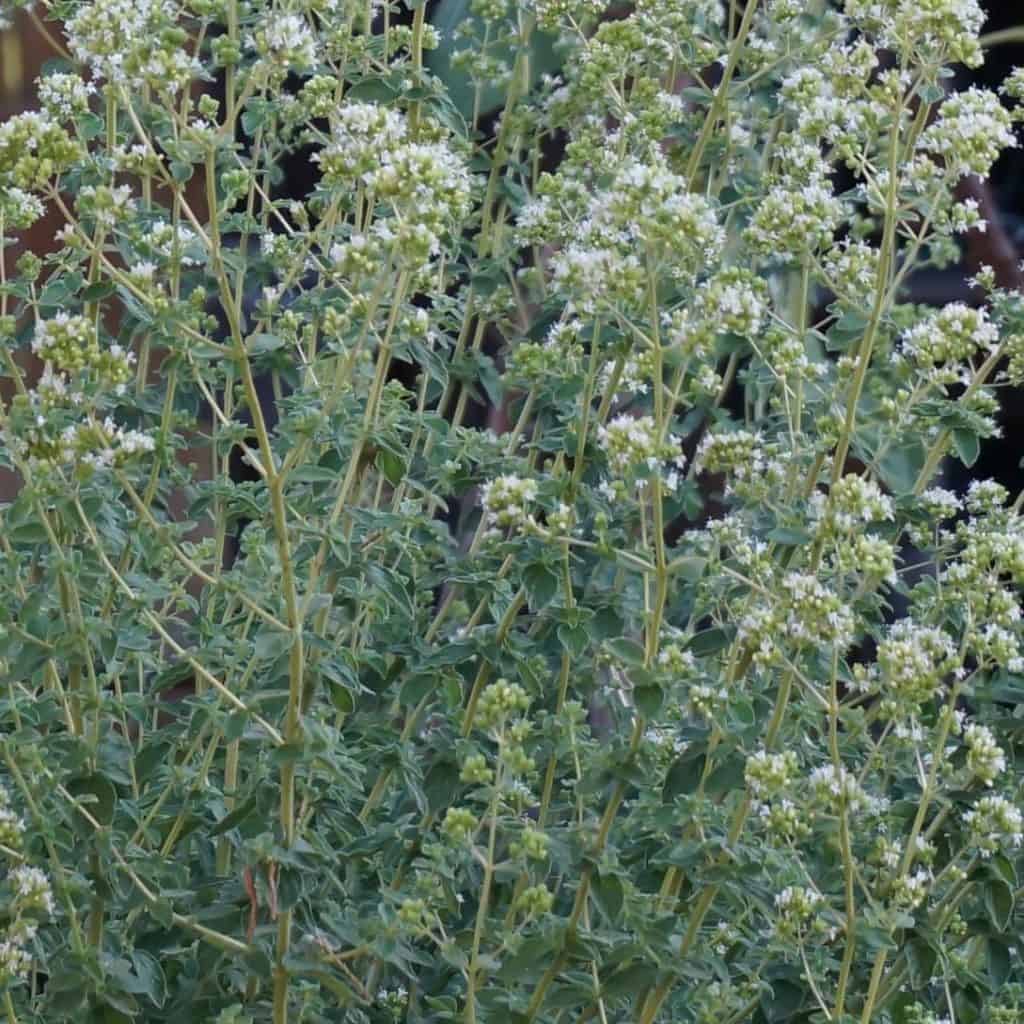
Enjoy more plant overviews from the Devotions Blog: Herbs of the Bible (and Spices) and The 7 Species: A Garden-to-Table Guide; general gardening Words in Top 10 Gardening Verses of the Bible and 8 Great Plant Lists; and flower fun in Planting Fall Crocus, Winter’s White Flowers and The Bible’s Red, White and Blue
Photo Credits: Cover photo and almond orchard photos ©Shelley S. Cramm – almond orchard visit to Kern County, CA in 2016, so delightful!; © Almaamor | Dreamstime.com – Pistachio Tree Photo close up of branch; ©2012 3rddimension | Dreamstime.com Pistachio orchard, Aegina Island, Greece, full of pistachio nuts; ID 325105350 | Juglans Regia © Menno Van Der Haven | Dreamstime.com Ripening walnuts on a tree with beautiful green leaves; flickr ©2010 Arthur English – Walnut Orchard; flickr ©Anthony Dunn Almond orchards in bloom in the Sacramento Valley, taken from the air; collection of almonds, pistachios, and walnuts in shells ©Shelley S. Cramm.
HCSB denotes Scripture quotations taken from the Holman Christian Standard Bible®, Copyright © 1999, 2000, 2002, 2003, 2009 by Holman Bible Publishers. Used by permission. Holman Christian Standard Bible®, Holman CSB®, and HCSB® are federally registered trademarks of Holman Bible Publishers.
The Message denotes Scripture quotations taken from THE MESSAGE, copyright © 1993, 2002, 2018 by Eugene H. Peterson. Used by permission of NavPress. All rights reserved. Represented by Tyndale House Publishers, a Division of Tyndale House Ministries.
NCB denotes Scripture taken from the SAINT JOSEPH NEW CATHOLIC BIBLE® Copyright © 2019 by Catholic Book Publishing Corp. Used with permission. All rights reserved.
NIV denotes Scripture quotations taken from the Holy Bible, New International Version®, NIV®. Copyright © 1973, 1978, 1984, 2011 by Biblica, Inc.® Used by permission of Zondervan. All rights reserved worldwide. www.zondervan.com The “NIV” and “New International Version” are trademarks registered in the United States Patent and Trademark Office by Biblica, Inc.®
NLT denotes Scripture quotations taken from the Holy Bible, New Living Translation, copyright © 1996, 2004, 2015 by Tyndale House Foundation. Used by permission of Tyndale House Publishers, Inc., Carol Stream, Illinois 60188. All rights reserved.
TPT denotes Scripture quotations taken from The Passion Translation®. Copyright © 2017, 2018, 2020 by Passion & Fire Ministries, Inc. Used by permission. All rights reserved. ThePassionTranslation.com


