Spikenard
nerd H5373
nardos G3487
Nardostachys jatamansi
Caprifoliaceae, Honeysuckle Family
Mary picked up an alabaster jar with nearly a liter of extremely rare and costly perfume—the purest extract of nard, and she anointed Jesus’ feet. Then she wiped them dry with her long hair. And the fragrance of the costly oil filled the house.
John 12:3 TPT

Read more on spikenard in the devotions series on En Gedi from the Garden Tour section, beginning on page a-16 in God’s Word for Gardeners Bible
They grow like an orchard of pomegranate trees and bear the finest fruits. There is no lack of henna and nard, of saffron, calamus, and cinnamon, or incense of every kind. Myrrh and aloes grow there with all the most fragrant perfumes.
Song of Songs 4:12-14 GNT
Cultural Information
| Type | Perennial |
| Height | 12 to 18 inches |
| Soil | dry, gravely, well-draining |
| Exposure | full sun |
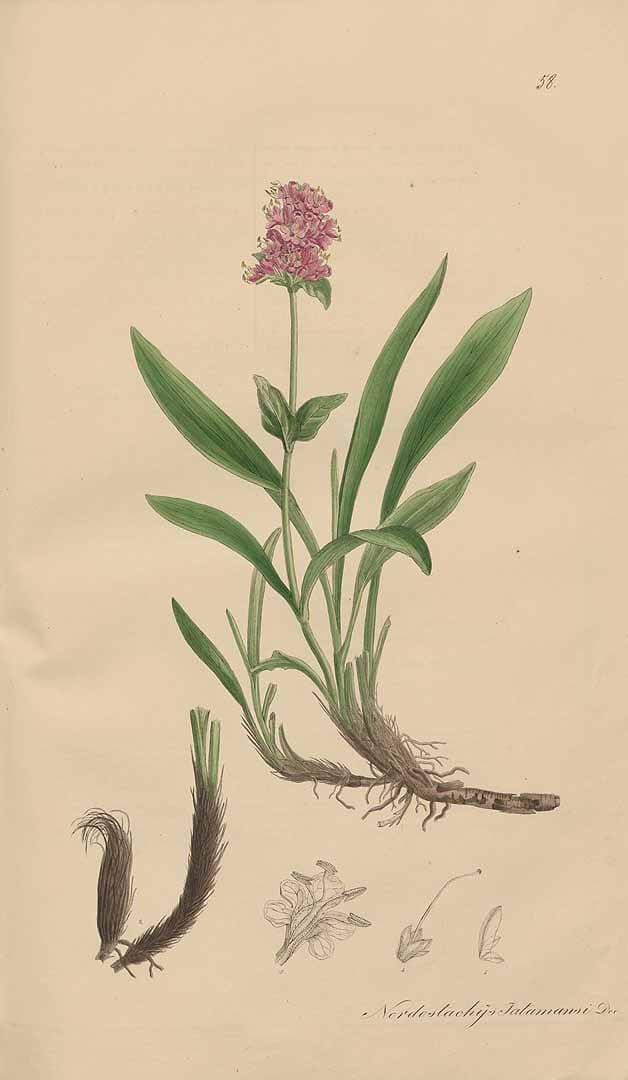
| Leaves | medium green, elliptical, pointed ends, central rib, soft like those of tulips, growing from central stem |
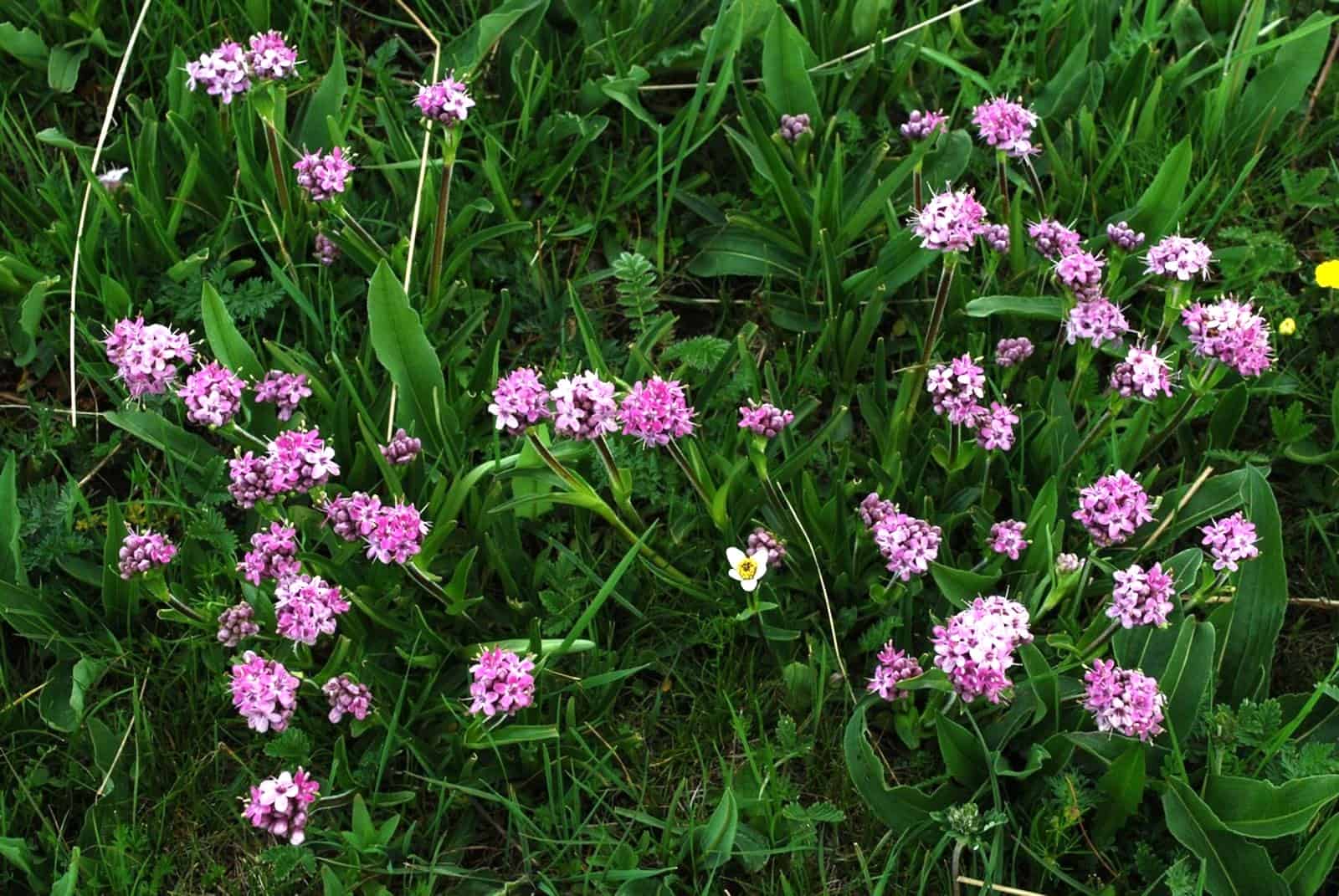
| Flowers | solitary rose-to-purplish spire of multiple blossoms, several spires to one plant |
Planting Tips
- spikenard is native to Nepal and the Himalayan regions of India
- typically spikenard grows above the treeline in alpine meadows
- commercial availability of plants is rare; plants are mostly wild-harvested and commerical cultivation is in beginning stages
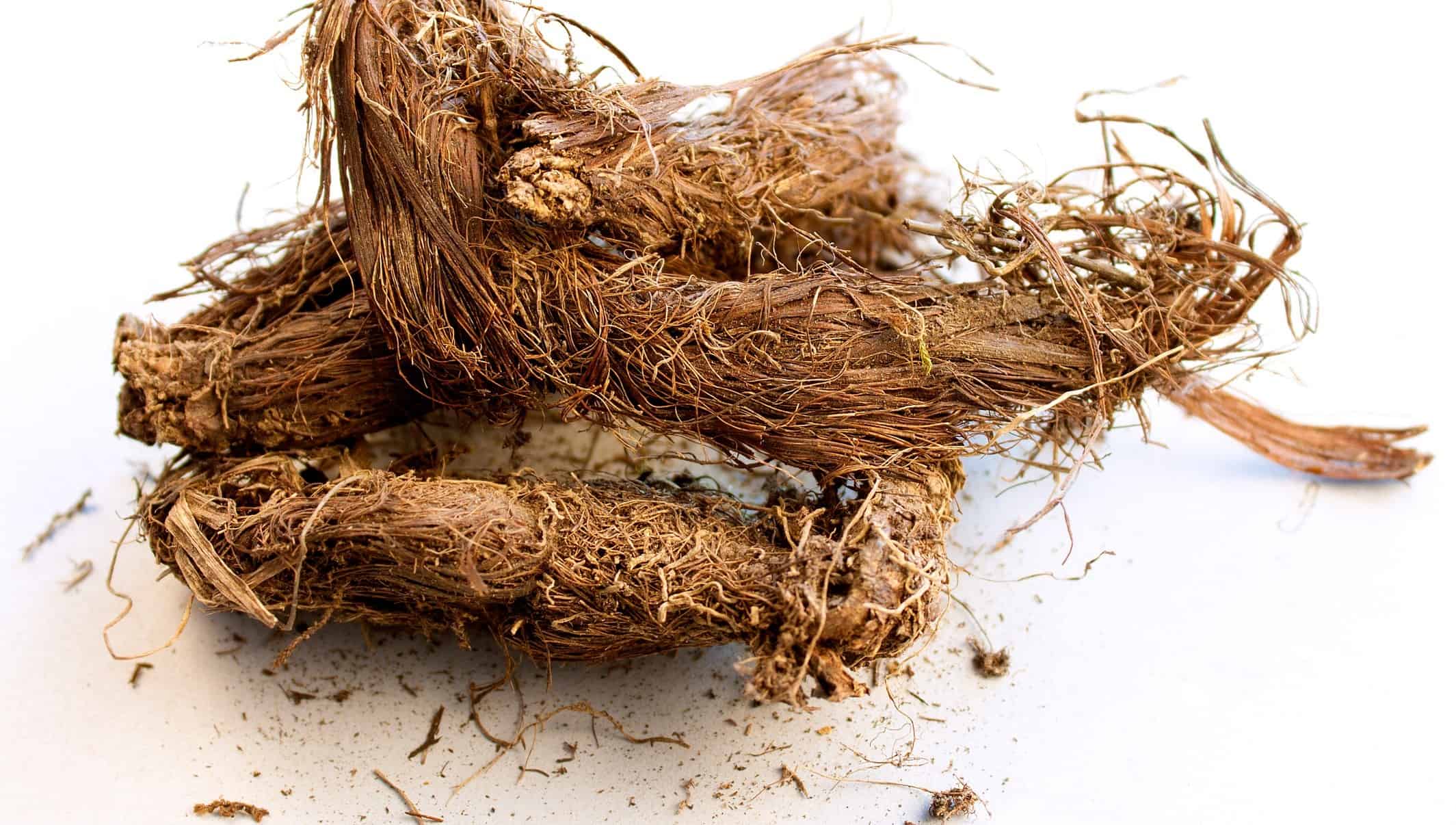
- oils for formulating its infamous perfume are distilled from its rhizomatous roots
- the full plant must be sacrificed in processing for its essential oil
- harvesting occurs suring a short period in the late spring
- propagated by rhizomes
- rhizome-roots and lower stem are covered by root hairs, which help protect the plant in extreme temperatures
Garden to Table
- spikenard plants will be very difficult to obtain for your garden, but essential oils and candles are available commercially to sample and be surrounded by the distinctive scent
- to symbolize spikenard in your garden, substitute valerian plants (similar plant genus), tuberose or gladiolus (spikey, fragrant flowers by corms)
- or try lamb's ear - unrelated botanically, but with similarly-formed roots and rhizomatous-like spread, along with purplish flower spires in late spring
- American spikenard, Aralia racemosa, an American native plant, is not related at all botanically, as it is a shrub not an herbaceous plant, but in name alone a reminder of spikenard
More Research
See Blog Posts on SpikenardThe enthralling list of scented spices in the lovers’ romantic garden was largely an imported catalog from the Far East (Song of Songs 4:13 – 14). Solomon, traditionally credited as being the author of Ecclesiastes and Song of Songs, was renowned for his knowledge of plant life (1 Kings 4:33), and might have sought these species from merchants, gathering a fantastic and luxuriant world-wide collection for his own gardens (Ecclesiastes 2:5; Song of Songs 3:6)...Several from this list — nard (spikenard), incense (frankincense) and myrrh — blessed Jesus (Matthew 2:11; Mark 14:3).
-from the NIV God's Word for Gardeners Bible
They grow like an orchard of pomegranate trees and bear the finest fruits. There is no lack of henna and nard, of saffron, calamus, and cinnamon, or incense of every kind. Myrrh and aloes grow there with all the most fragrant perfumes.
Song of Songs 4:12-14 GNT
Photo Credits
© Ziprashantzi | Dreamstime.com Photo 16618283 | Nardostachys Jatamansi rhizomes of spikenard, also called muskroot
From www.plantillustrations.org, botanical illustration of Nardostachys jatamansi by T.F.L. Nees von Esenbeck and M.F. Wijhe (Weyhe), Plantae medicinales, Supplement (1828-1833) Plate 58
©Bing Liu from Plants of the World Online by Kew, Royal Botanic Gardens Nardostachys jatamansi – Ngawa Tibetan and Qiang Autonomous Prefecture, Sichuan, China. Borrowed from Plants of the World Online, Kew Royal Botanic Gardens, Please see Kew website for copyright information: https://powo.science.kew.org/taxon/urn:lsid:ipni.org:names:859418-1

